
Wedding Marquee Sizes: A Complete Guide to Traditional Pole Marquees
Planning a wedding in a traditional pole marquee is one of the loveliest ways to host an outdoor celebration in the UK — light, canvas, ropes and poles, and that unmistakable “English summer wedding” feel. But the part that quietly makes (or breaks) the guest experience is sizing.
Choose too small and you’ll feel it all day: chairs too tight to pull out, queues at the bar, a dance floor that becomes a bottleneck, and the catering team fighting for space. Choose the right size and everything flows — guests feel looked after, the layout looks intentional, and your wedding feels calm, comfortable, and beautifully hosted.
This guide is your core hub for wedding marquee sizes and traditional pole marquee sizes, written for couples and planners who care about comfort, styling, and a luxury pace — not squeezing in “maximum capacity”. We’ll cover exactly how sizing works, what changes the numbers, and a clear breakdown of the pole marquee sizes we offer.
Quick links to marquee sizes guides:
Introduction
When people search for a wedding marquee size guide, they often expect a simple “X guests = Y metres” answer. In reality, marquee sizing is about how you want the wedding to feel.
A traditional petal pole marquee is not a blank box. It has:
centre poles and internal uprights,
rope lines and stakes (guy ropes) outside the canvas,
natural “zones” created by bays and pole positions,
Traditional pole marquees are typically made in set spans (commonly 9m and 12m wide) with length added in modular sections. That modular approach makes it easy to scale up — but choosing the right length (and planning for comfort) is where expertise matters.
How Wedding Marquee Sizes Are Calculated
Guest numbers vs usable space
Two marquees with the same floor area can feel very different depending on what’s inside. For a wedding, the “usable space” includes:
a bar (and queue space),
dancing (and access to it),
a band/DJ footprint,
cloakroom, lounge seating, or a snug,
and catering/service zones
Many generic charts quote capacities designed to maximise numbers. For a comfort-first wedding, it helps to start with realistic space-per-person guidance and then layer in your “extras”.
A useful rule of thumb used in the industry is:
Seated dining on round tables: allow around 1.4 m² per guest for comfortable spacing and circulation
Seated dining on long/banquet tables: allow around 1.2 m² per guest
That’s just for dining. Dancing, bars, and lounges are additional.
Seating styles: round tables vs long tables
Round tables (often 1.5m–1.8m diameter) look classic in a marquee and feel sociable, but they take more floor area because the circle creates “wasted corners”.
Trestle tables are space-efficient and create a strong style statement, but you’ll want generous aisles for service and guest movement.
Space lost to poles, guy ropes, and walkways
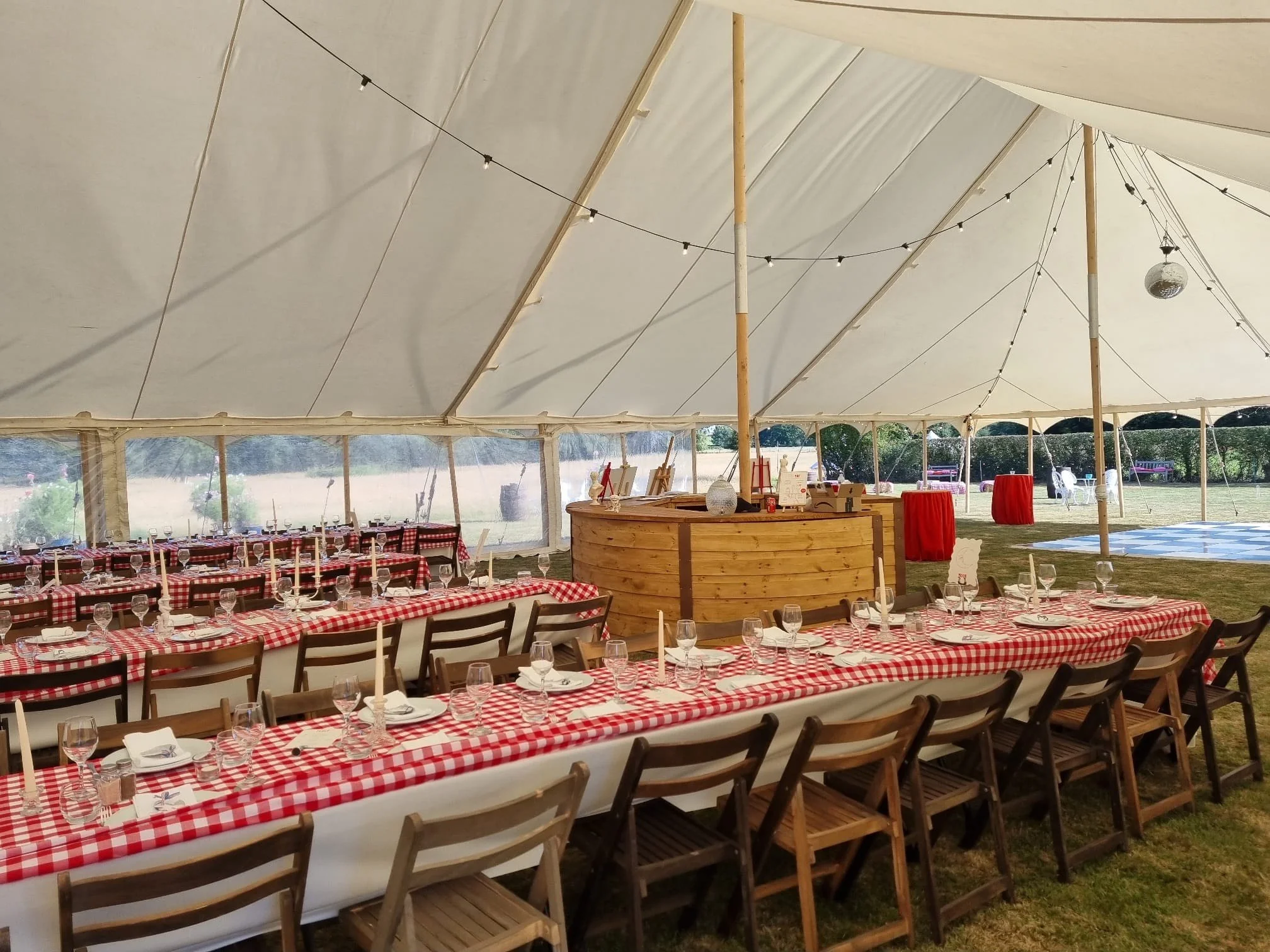
Traditional pole marquees have internal poles and require external ropes and stakes, meaning:
inside: you’ll plan table placement around pole lines (not difficult, but it affects “perfect symmetry” layouts),
outside: you need extra ground around the marquee footprint for guy ropes.
We advise allowing extra clearance around the outside for stakes and side ropes
Also plan for walkways inside:
a main aisle (especially if you’re doing ceremony + reception),
service routes (so staff can clear plates without squeezing past guests),
and natural circulation between the bar, loos, seating and dance floor.
How to Choose the Right Marquee Size for Your Wedding
Start with guest count — then decide the feel
Ask yourselves:
Do we want a lively, packed dance floor — or more breathing space and lounge seating?
Are we planning a generous dining setup with wide aisles and statement florals?
Will we have late-night food, a coffee station, or a champagne bar?
Comfort-first planning nearly always points one size larger than a “capacity chart” would suggest.
Clarify what’s happening in the marquee
Ceremony only: you need clear sightlines and a central aisle; chair layout drives size.
Reception only: dining + dancing + bar are the big space users.
Both ceremony and reception: you either need a “flip” plan (resetting the space) or enough space to keep zones separate.
Think in zones, not just metres
A well-planned pole marquee usually includes:
a welcome/drinks zone near the entrance,
a dining zone that feels balanced and symmetrical,
and a dance/bar zone that can run late without disturbing seated guests.
4) Weather, seasonality, and comfort
UK weddings need a practical comfort plan:
spring/autumn: you’ll likely want more indoor mingling space and fewer “everyone outside” assumptions,
hot days: you still need shade and airflow; a slightly larger marquee can feel cooler and calmer,
rain: wet-weather weddings work best when the marquee can comfortably hold guests for longer spells without feeling crowded.
Wedding Marquee Size Breakdown
Below are the pole marquee sizes we commonly use (and that we recommend planning around). These are written for a luxury, comfort-first experience, not maximum squeeze.
Note on capacities: Traditional marquee suppliers often publish high “seated” numbers using tight layouts (for example, seating per 3m x 3m bay can vary widely depending on table size and spacing). In this guide, we’re deliberately aiming for spacious and comfortable.
9m x 9m Wedding Marquee
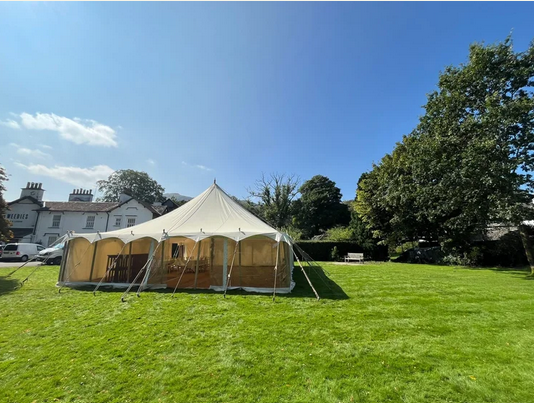
Dimensions: 9m x 9m (81 m²)
Ideal seated guest capacity
30–50 seated (depending on table style and how much space you want for a bar or small dance area)
Ideal standing / drinks reception capacity
50–80 standing for a relaxed drinks reception
Best wedding use cases
Intimate wedding breakfast
Ceremony marquee for smaller guest lists
Drinks reception hub (especially alongside separate dining structure)
Evening “dance + bar” marquee for a small party
Example layout
Round tables for 32–40 guests with a small bar along one side, or
Ceremony seating with a central aisle and a styled entrance area
Styling and planning tips
Keep décor vertical: foliage on poles, statement pendants, or a central floral moment.
Consider long tables if you want a more spacious feel with fewer tables.
If you want dancing, plan a defined dance zone rather than “dancing between tables”.
Check out our full 9 x 9m wedding marquee guide
9m x 15m Wedding Marquee
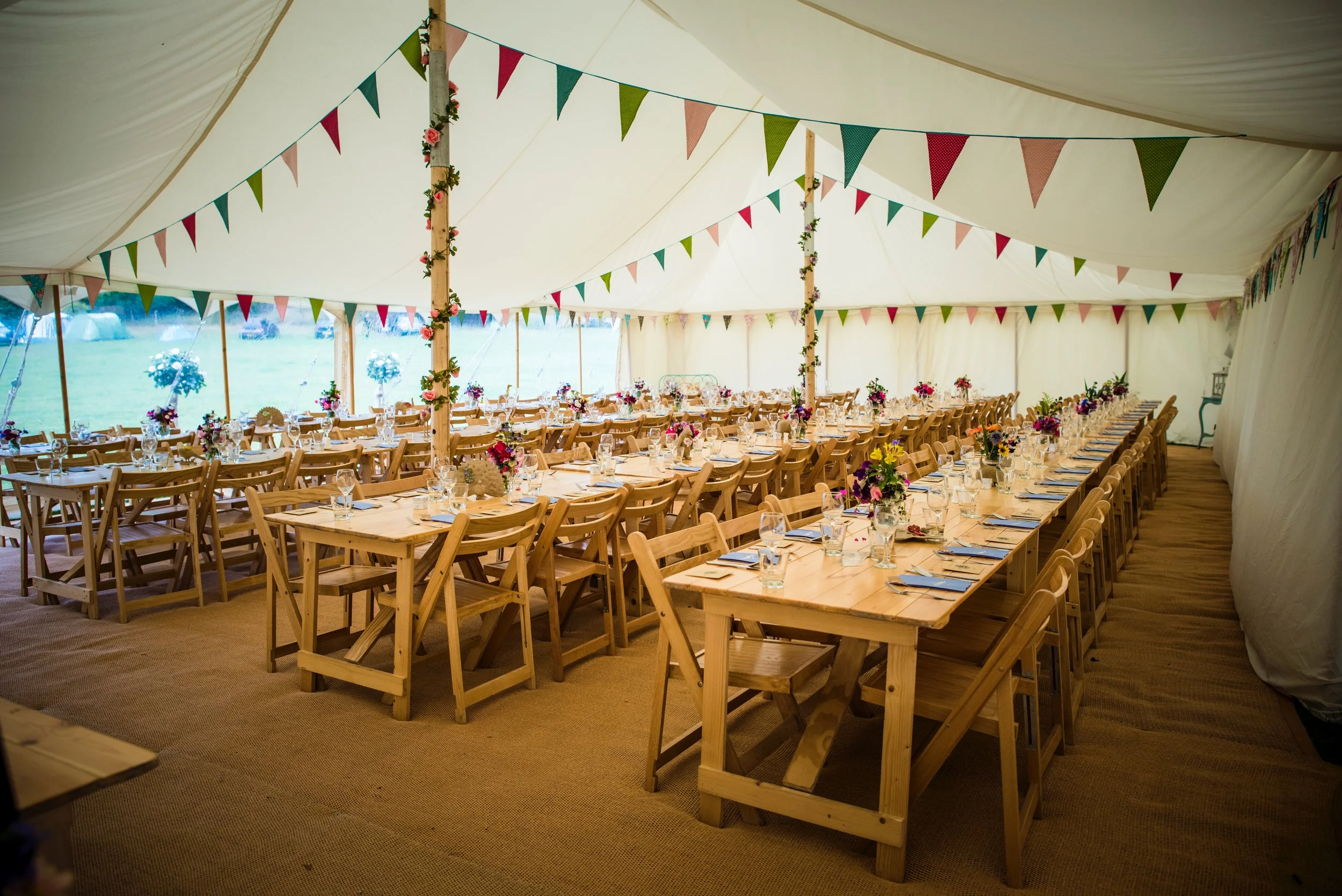
Dimensions: 9m x 15m (135 m²)
Ideal seated guest capacity (comfortable)
60–80 seated
Ideal standing / drinks reception capacity
90–130 standing
Best wedding use cases
Reception marquee for medium guest lists
Ceremony + drinks reception with space for a bar
Dining + a modest dance floor if you’re keeping the layout efficient
Example layout
Dining for 70 with round tables, plus a bar at the far end and a small lounge nook near the entrance.
Styling and planning tips
A 9m width suits a classic “two rows of round tables” look, but leave generous aisles.
Pole positions can be used as natural styling anchors (wraps, greenery, uplighting).
If you’re adding a band, allow space for the footprint plus guest “standing room” nearby.
Check out our full 9 x 15m Wedding Marquee Guide
9m x 21m Wedding Marquee
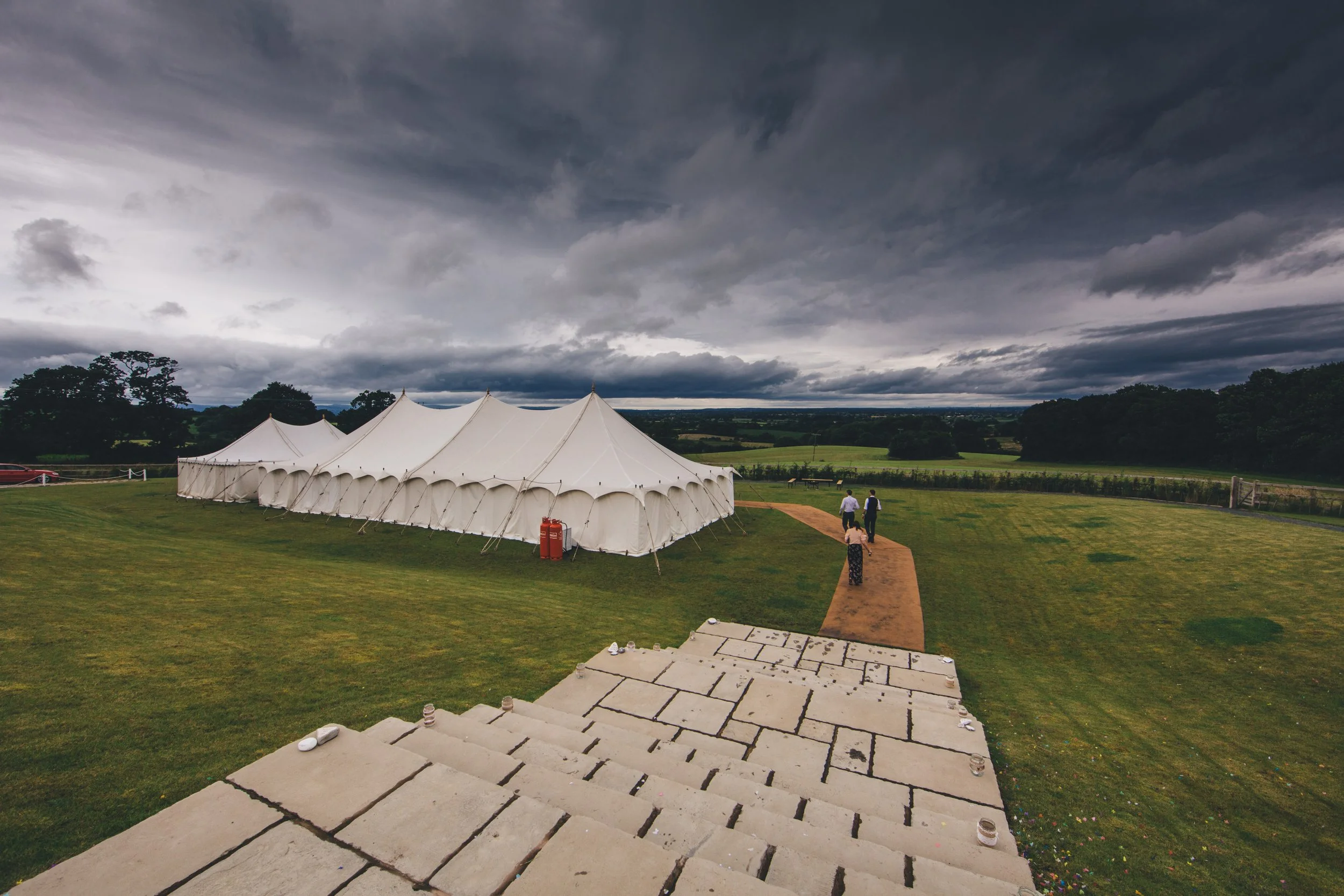
Dimensions: 9m x 21m (189 m²)
Ideal seated guest capacity (comfortable)
90–110 seated
Ideal standing / drinks reception capacity
140–190 standing
Best wedding use cases
Wedding reception marquee with dining + dancing
Ceremony + reception where you’d like clear zones
Weddings with a live band (with sensible spacing)
Example layout
Front third: drinks/bar lounge
Middle: dining (round tables)
Back: dance floor + band/DJ
Styling and planning tips
This size gives you room to make the dance floor feel like a destination, not an afterthought.
Consider a “feature bar” with space for queues that doesn’t interrupt service routes.
If you’re planning a room flip (ceremony to dining), this size makes it easier to do without stress.
Check out our full 9 x 21m Wedding Marquee Guide
9m x 28m Wedding Marquee
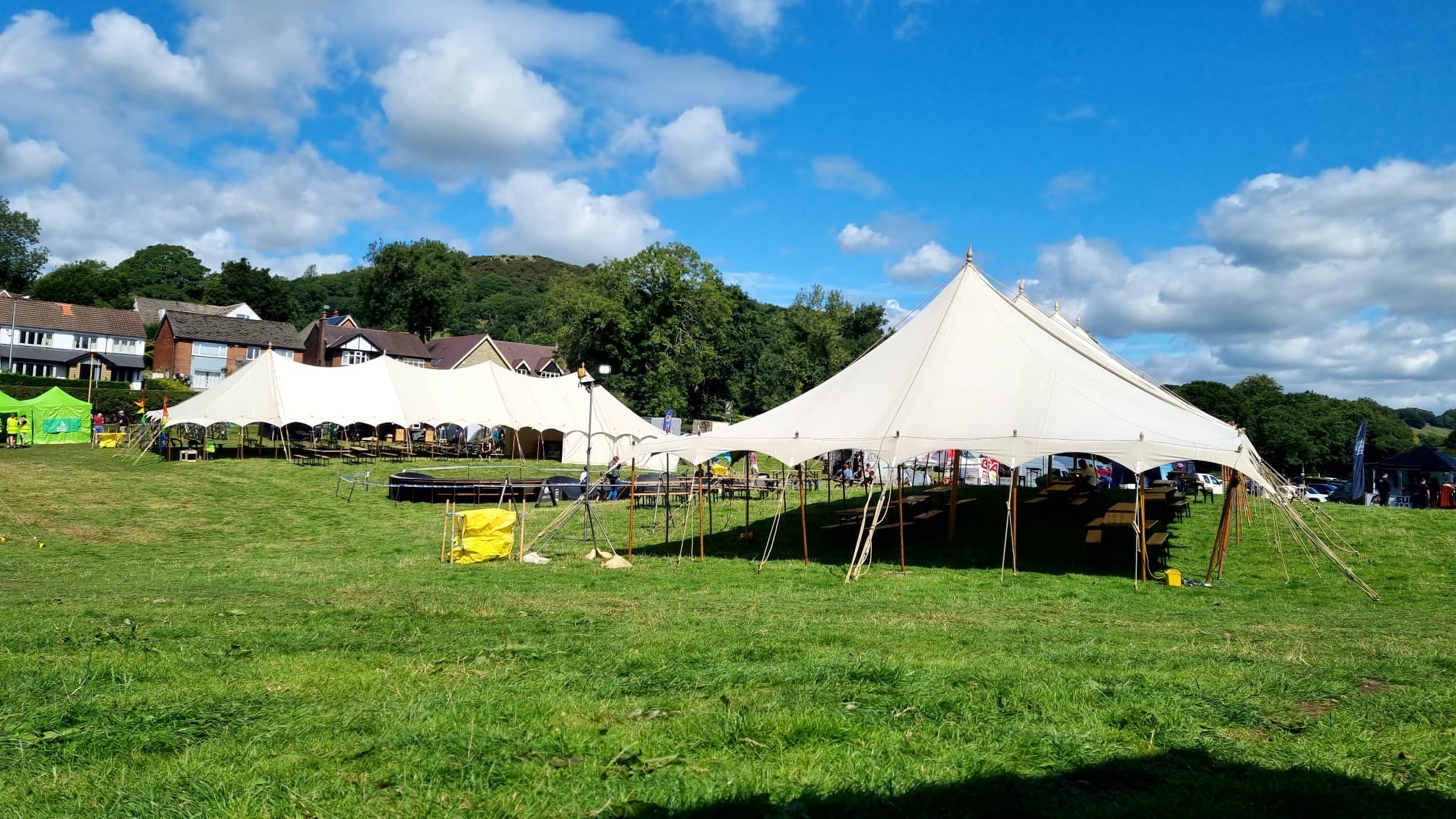
Dimensions: 9m x 28m (252 m²)
Ideal seated guest capacity (comfortable)
120–150 seated
Ideal standing / drinks reception capacity
200–260 standing
Best wedding use cases
Larger wedding receptions with generous dining + proper dance/bar zone
Weddings that need indoor mingling space (shoulder seasons)
Parties with band + dance floor + lounge seating
Example layout
Dining for 130–140 guests plus:
a full bar area,
a dedicated dance floor,
a lounge seating corner,
and a clear entrance “welcome” zone.
Styling and planning tips
Use the length to create a journey: entrance → drinks → dining → dancing.
Long table styling works beautifully here if you want a runway-like centrepiece look.
Consider acoustic comfort: soft furnishings, linings, and florals help the space feel warm rather than cavernous.
See how our 9 x 28m Wedding Marquees looked at Bolly Skyline Enduro Festival
12m x 18m Wedding Marquee
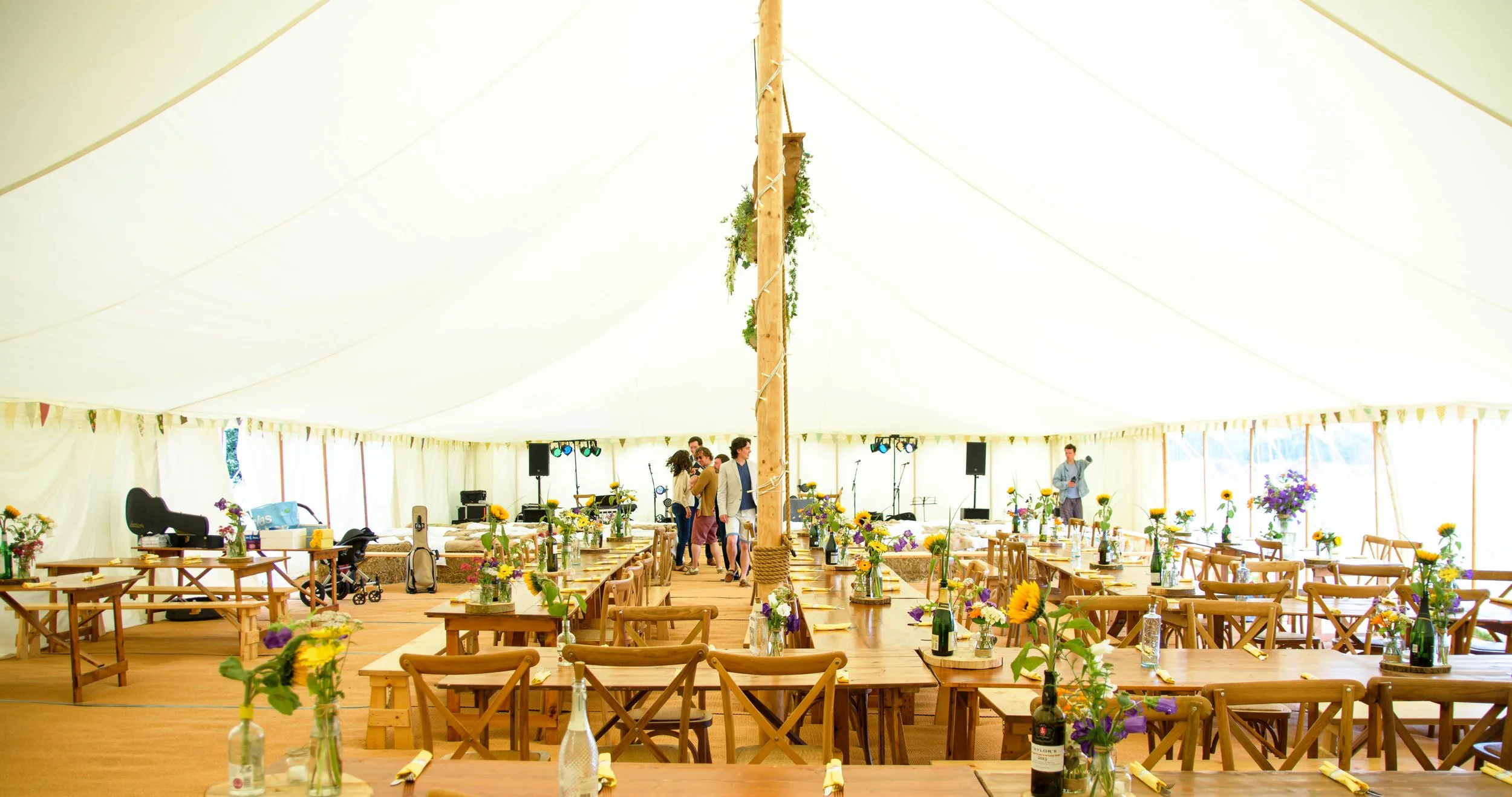
Dimensions: 12m x 18m (216 m²)
Ideal seated guest capacity (comfortable)
110–130 seated
Ideal standing / drinks reception capacity
180–240 standing
Best wedding use cases
Receptions where you want dining + dancing without compromise
Weddings with entertainment (band, sax, DJ booth) plus lounge seating
Ceremony + reception with clear zoning
Example layout
Dining for 120, a dedicated dance floor, a bar with queue space, and a small lounge corner.
Styling and planning tips
This is a “sweet spot” size for many UK weddings: large enough for comfort, still intimate with the right styling.
Plan a clear line-of-sight from entrance to dining to keep the space feeling connected.
View our complete 12 x 18 wedding marquee guide
12m x 24m
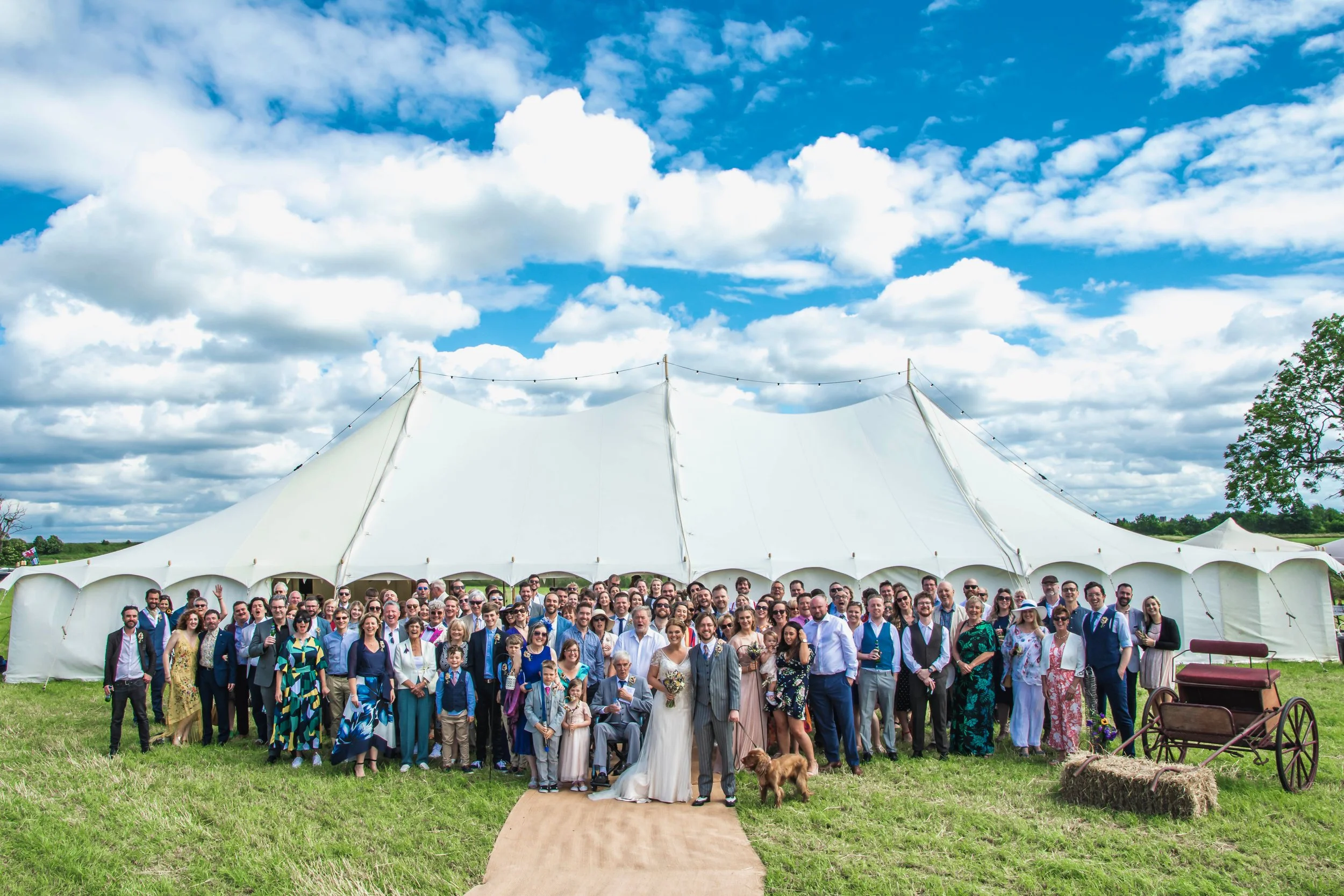
Dimensions: 12m x 24m (288 m²)
Ideal seated guest capacity (comfortable)
140–170 seated
Ideal standing / drinks reception capacity
240–320 standing
Best wedding use cases
Larger home and garden weddings with a luxury layout
Weddings where you want dining + dancing + lounge seating + bar as standard
Events likely to spend significant time indoors (unpredictable weather)
Example layout
Welcome/drinks zone near the entrance
Dining for 150–160
Bar + lounge area that transitions into dancing
Styling and planning tips
Use lighting to “zone” the marquee: warm dining glow, a moodier dance zone.
Consider creating a dedicated lounge with rugs, sofas, and low tables — it changes how guests use the space.
If you’re using round tables, allow generous aisle width so staff can serve smoothly.
View our complete 12 x 24 Wedding Marquee guide
12m x 30m Wedding Marquee
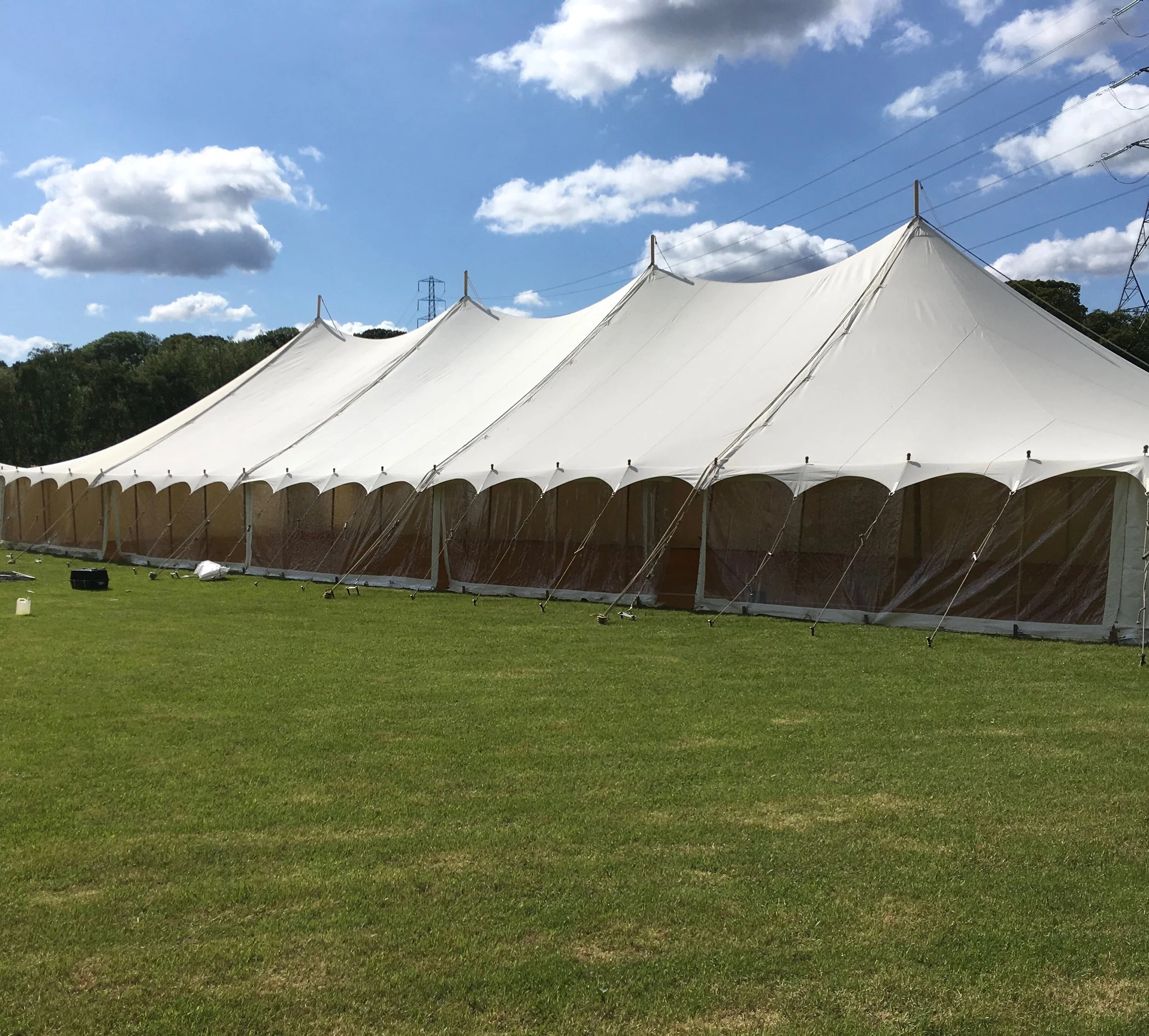
Dimensions: 12m x 30m (360 m²)
Ideal seated guest capacity (comfortable)
180–220 seated
Ideal standing / drinks reception capacity
320–420 standing
Best wedding use cases
Large weddings with distinct zones (and no feeling of crowding)
Receptions with full production: band + dance floor + lounge + feature bar
Weddings with multiple moments indoors (ceremony, dining, dancing, late-night food)
Example layout
A true “marquee venue” layout:
ceremony or welcome lounge at one end,
dining as the centrepiece,
dancing and bar at the other,
plus optional extras like a snug, photo moment area, or late-night food station.
Styling and planning tips
Larger marquees look best when styling is intentional: think ceiling drapes/linings, layered lighting, and strong focal points.
Build in “breathing spaces” so guests don’t feel they’re walking through table grids.
If you’re planning a band, consider a slightly larger dance floor — bigger guest lists dance in waves.
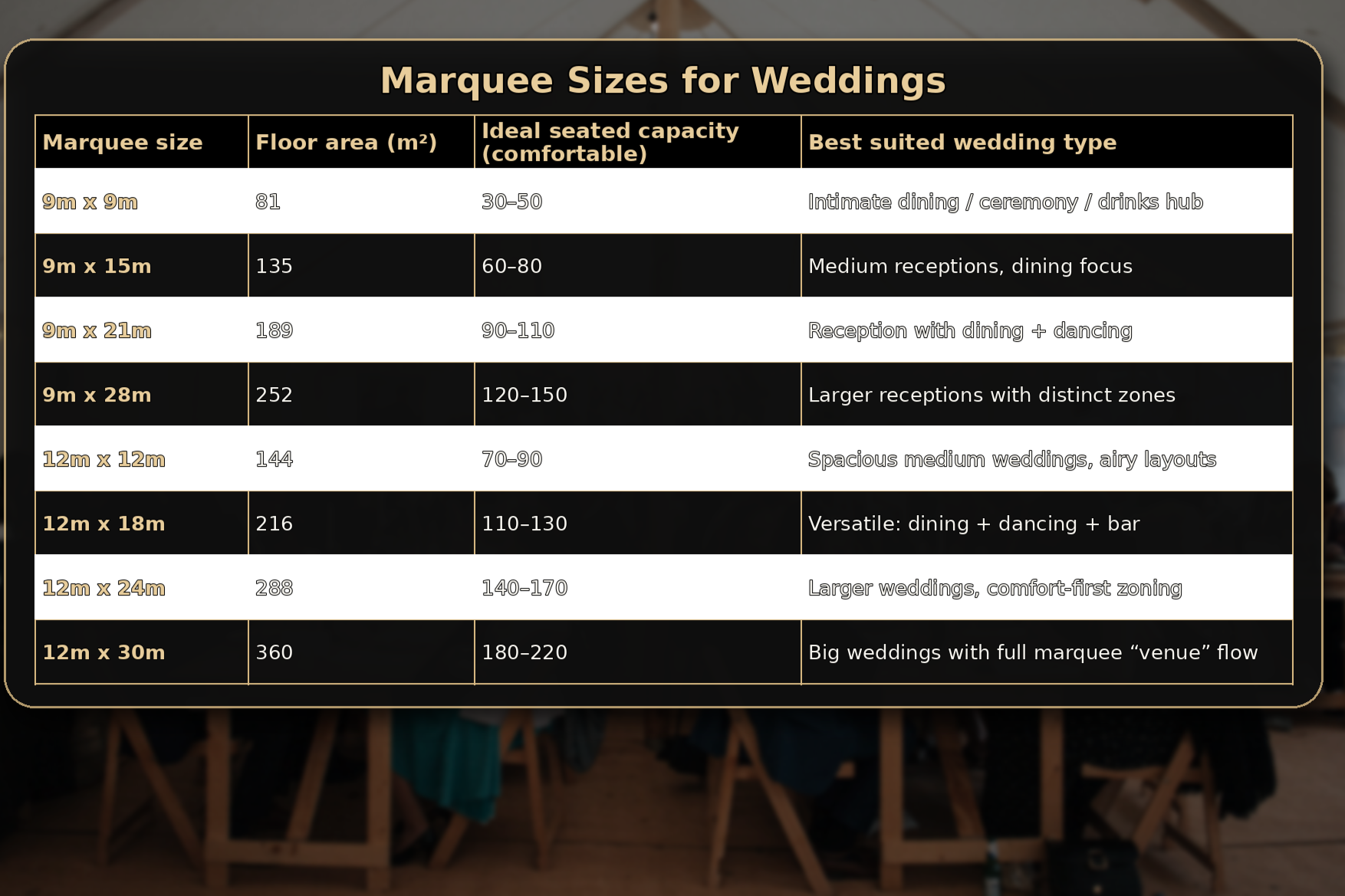
Wedding Marquee Size Comparison Table
Common Mistakes When Choosing a Wedding Marquee Size
1) Choosing based only on guest numbers
Guest count is only one variable. A 120-guest wedding with a large band, lounge seating, and a statement bar needs more space than a 120-guest “dining only” setup.
2) Forgetting catering or band space
Even if catering is in a separate tent, you still need:
a place for staff to stage service,
a route for hot plates,
and space for band/DJ, speakers, and equipment.
3) Not planning for weather contingencies
If you’re relying on guests “spilling out onto the lawn”, ask: what if it rains at 5pm? In the UK, a comfort-first plan assumes you may need more indoor mingling space.
4) Underestimating circulation space
People don’t move in single file at weddings. They chat, hug, queue, and drift. Good circulation space is what makes a marquee feel like a luxury venue rather than a temporary structure.
Frequently Asked Questions
1) What size marquee do I need for 100 guests?
For a comfort-first wedding with dining plus a bar and dancing, many couples land around:
9m x 21m (if you’re keeping it efficient), or
12m x 18m (if you want more width, easier circulation, and a calmer feel).
If it’s dining only (no dance floor inside), you may be comfortable in 9m x 21m or 12m x 12m/12m x 18m depending on layout and extras.
2) What size marquee do I need for a wedding reception?
A reception usually means dining and dancing and a bar. For most weddings, that pushes you into:
9m x 21m and above, or
12m x 18m and above,
depending on guest count and how many zones you want.
3) How much extra space should I allow beyond dining?
As a practical planning mindset:
start with dining space per guest (round tables often need more room than long tables ),
then add dedicated zones for bar, dancing, entertainment, and lounge seating.
If you want a truly relaxed flow, going up one length increment is often the simplest way to buy comfort.
4) Do traditional pole marquees feel smaller inside?
They can, mainly because:
internal poles influence where tables sit,
and guests naturally avoid narrow pinch points.
That said, pole marquees also feel warmer and more romantic than many “blank box” structures — and with a good layout, they feel beautifully proportioned rather than smaller.
5) Can I combine multiple traditional pole marquees?
Yes, and it’s often an elegant approach. Couples commonly use separate marquees (or connected structures) for:
dining in one, dancing in another,
or dining + dancing with a separate ceremony or drinks space.
This can also help with garden layouts and preserve views.
6) What’s the difference between 9m wide and 12m wide marquees?
In practical terms:
12m width gives more breathing room, wider aisles, and more flexible layouts.
9m width can feel very classic and charming, but it benefits from careful planning if you want dining plus dancing.
7) How do I plan space for a dance floor?
A dance floor needs:
the floor itself,
space around it (people gather at the edges),
and room for DJ/band equipment.
If dancing is a priority, choose a marquee that allows a dedicated dance zone rather than squeezing dancing between tables.
8) Should the ceremony be inside the marquee?
It depends on season and site. In the UK, having the option of an indoor ceremony can be wonderfully reassuring. If the ceremony is inside:
allow space for an aisle,
consider sightlines,
and plan whether the room will be “flipped” for dining.
9) How much space do I need around the marquee on the lawn?
Traditional pole marquees use ropes and stakes, so you need clearance beyond the floor footprint for the guying. Some providers recommend allowing extra space around the structure for stakes/side ropes. A proper site visit is the best way to confirm what your garden can comfortably accommodate.
10) What if my guest list grows after I’ve chosen a marquee?
It’s common — and it’s one reason modular pole marquees are so helpful. Because lengths can be extended, you can often scale up in a measured way, rather than rethinking the entire plan.
11) Is it better to go slightly bigger?
If budget and site allow, yes. A slightly larger marquee improves:
comfort,
flow,
styling options,
and wet-weather resilience.
“Bigger” doesn’t have to mean empty — lighting, linings, and zoning make larger spaces feel intimate.
12) How accurate are marquee capacity charts?
They’re a useful starting point, but many are based on efficient/max layouts (for example, some guides reference how many guests fit per 3m x 3m bay depending on table choices). For a luxury wedding, it’s wiser to size for experience rather than the tightest possible plan.
Conclusion
Choosing the right wedding marquee size isn’t about memorising a chart — it’s about building a layout that supports the day you actually want: comfortable dining, easy movement, a bar that doesn’t bottleneck, and a dance floor that feels inviting.
Traditional pole marquees are wonderfully adaptable, and when sized thoughtfully they create that rare combination of elegance and ease — a wedding that feels beautifully hosted, whatever the British weather decides to do.
If you’d like tailored guidance, the simplest next step is to talk through your guest count, your “must-have” zones, and how you want the day to flow — then we can recommend the traditional pole marquee size that fits your site and your style (without overcomplicating it).