
9m x 21m Wedding Marquee: A Traditional Pole Marquee Guide for Seamless Dining + Dancing
A 9m x 21m traditional pole marquee is often the point where a wedding marquee starts functioning like a complete wedding venue — with proper zoning for dining, a bar that doesn’t cause bottlenecks, and a dance floor that feels like a destination rather than a squeezed corner.
If you’re planning a UK garden wedding and you’re asking questions like “What marquee size do I need for 100 guests?” or “Can we fit dining and dancing in one marquee comfortably?”, this size is usually where the answer becomes reassuringly “yes”.
Why choose a 9m x 21m traditional pole marquee?
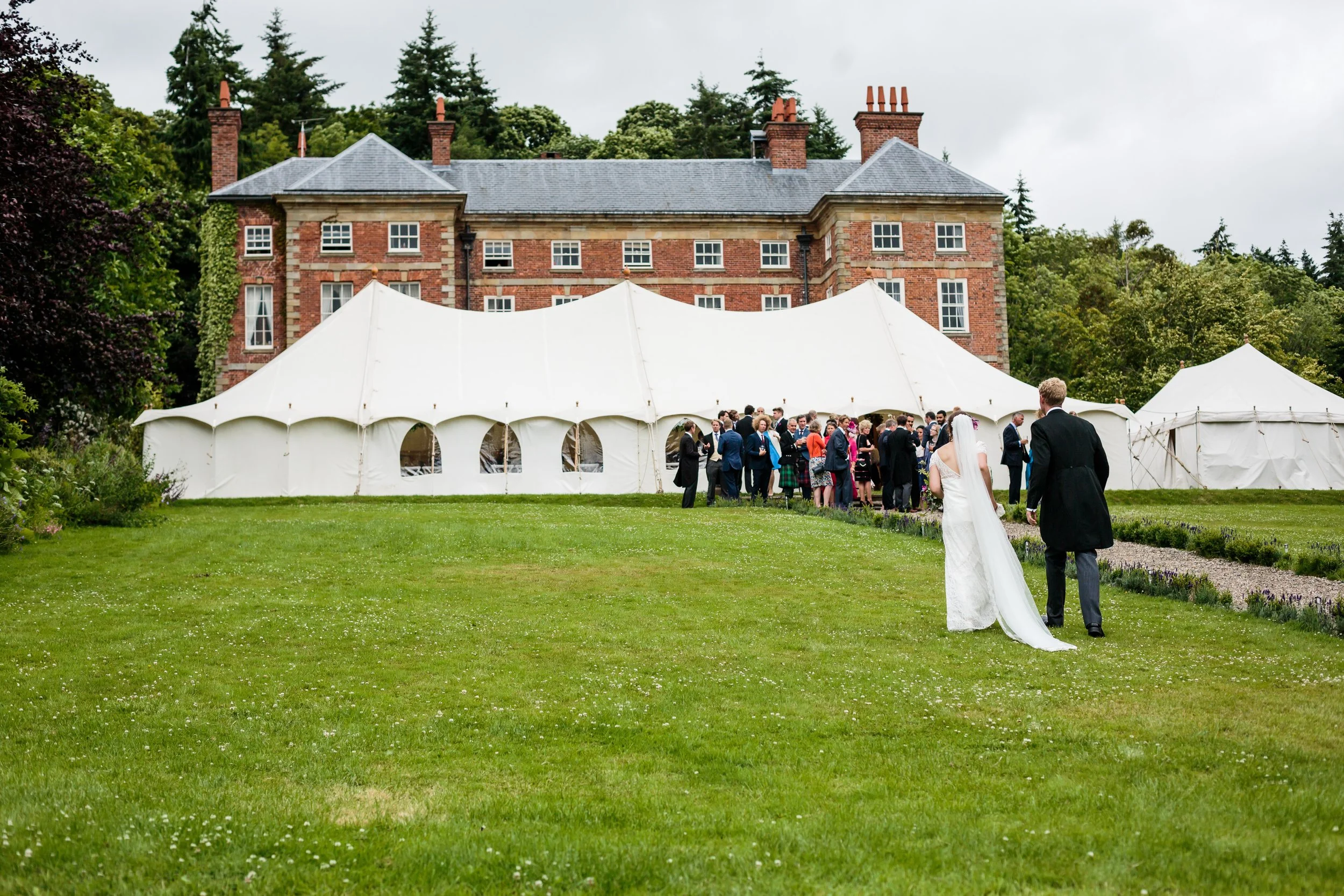
This is one of the most popular sizes for couples who want:
a full wedding day structure in one main space
comfortable dining and a dance floor that isn’t an afterthought
a bar area with room for guests to gather without blocking the main routes
In short: it’s often the “yes, we can do it properly” size.
It’s also ideal for weddings where you expect guests to spend meaningful time indoors (spring, autumn, or any forecast that makes you want a strong Plan A rather than a nervous Plan B).
How big is a 9m x 21m marquee?
A 9m x 21m marquee gives you:
189 m² of floor area (9 × 21)
The key advantage over 9m x 15m isn’t just “more space” it’s layout freedom. You can create distinct zones without forcing guests to walk through dining to reach the bar, or through the bar to reach the dance floor.
That separation is what makes a wedding feel polished.
9m x 21m wedding marquee capacity
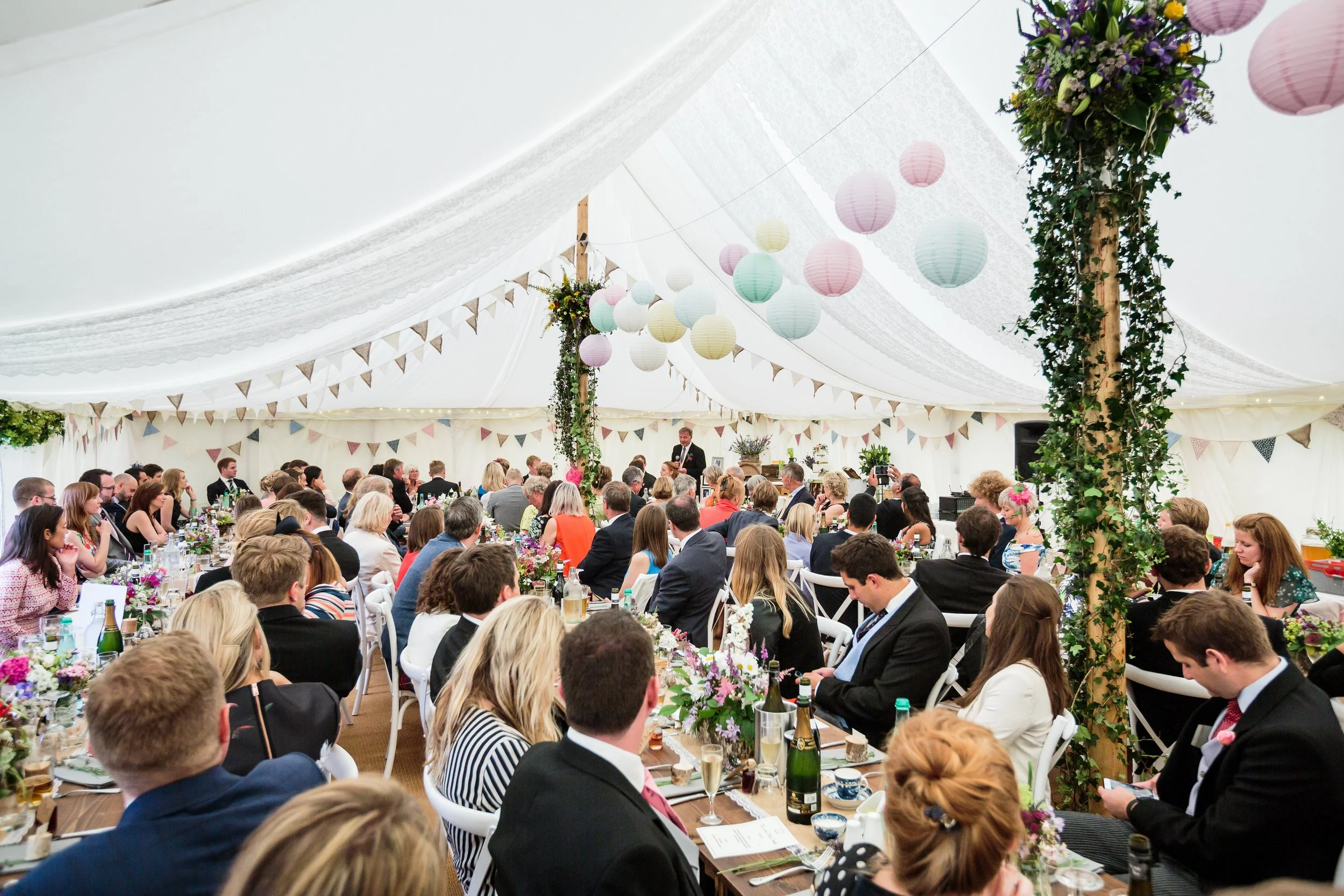
Ideal seated guest capacity
90–100 guests feels generous with round tables and comfortable circulation
100–110 guests works well with efficient layout choices (or long tables) and sensible “extras”
Ideal standing / drinks reception capacity
140–170 guests feels relaxed for drinks and mingling
170–190 guests is possible for shorter periods if you’re not heavily furnishing the marquee
A useful way to think about it: This size often suits the classic UK question, “What size marquee do I need for 100 guests?” — particularly when you want dining plus a dance floor and bar.
Best uses for a 9m x 21m pole marquee
Excellent for
Wedding reception with dining + dancing
Band or DJ (with room for guests to gather comfortably)
Ceremony + reception in one main structure (with careful planning)
Wet-weather resilience without everyone feeling packed in
Less ideal for
Couples who want very wide aisles, very large lounges, or “no compromises” comfort at higher guest counts — that’s where a 12m width often feels more luxurious.
The “three-zone” layout that makes this size work
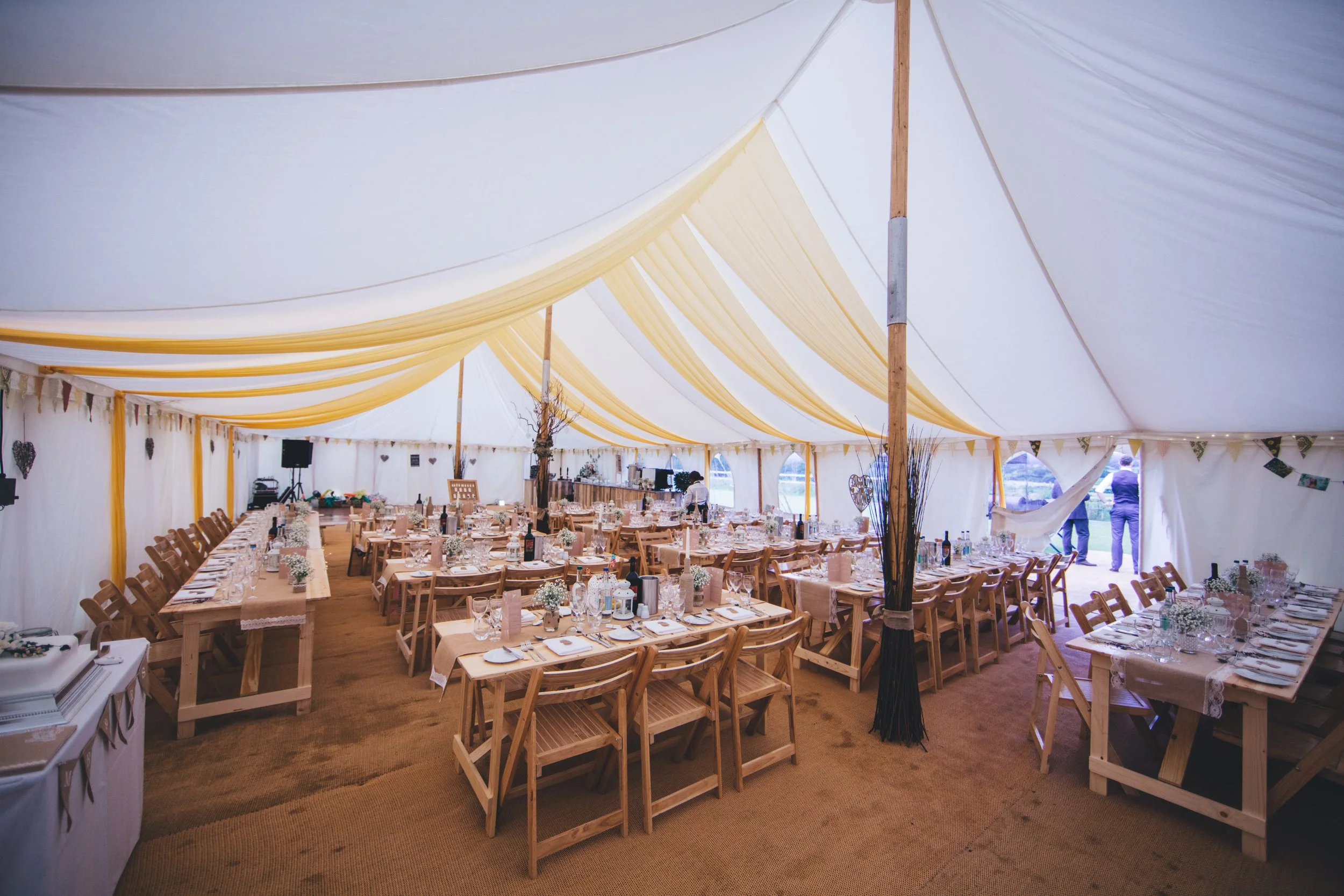
A 9m x 21m works best when it’s planned as three connected rooms, even though it’s one continuous space.
Zone 1: Welcome + drinks
Purpose: arrivals, mingling, a calm start
What to include:
a simple welcome point (order of the day / escort cards)
perch tables or a small lounge cluster
space for greetings (so guests aren’t immediately in the dining setup)
Why it matters: It stops the entrance feeling like a pinch point.
Zone 2: Dining
Purpose: the main seated moment
What makes it feel premium:
consistent spacing between tables
clear service lanes
a plan for speeches (sightlines and sound)
This zone usually sits in the middle so it feels anchored and balanced — and so guests aren’t walking through the top table area to reach the loos or bar.
Zone 3: Dancing + bar
Purpose: energy, flow, late-night comfort
Key elements:
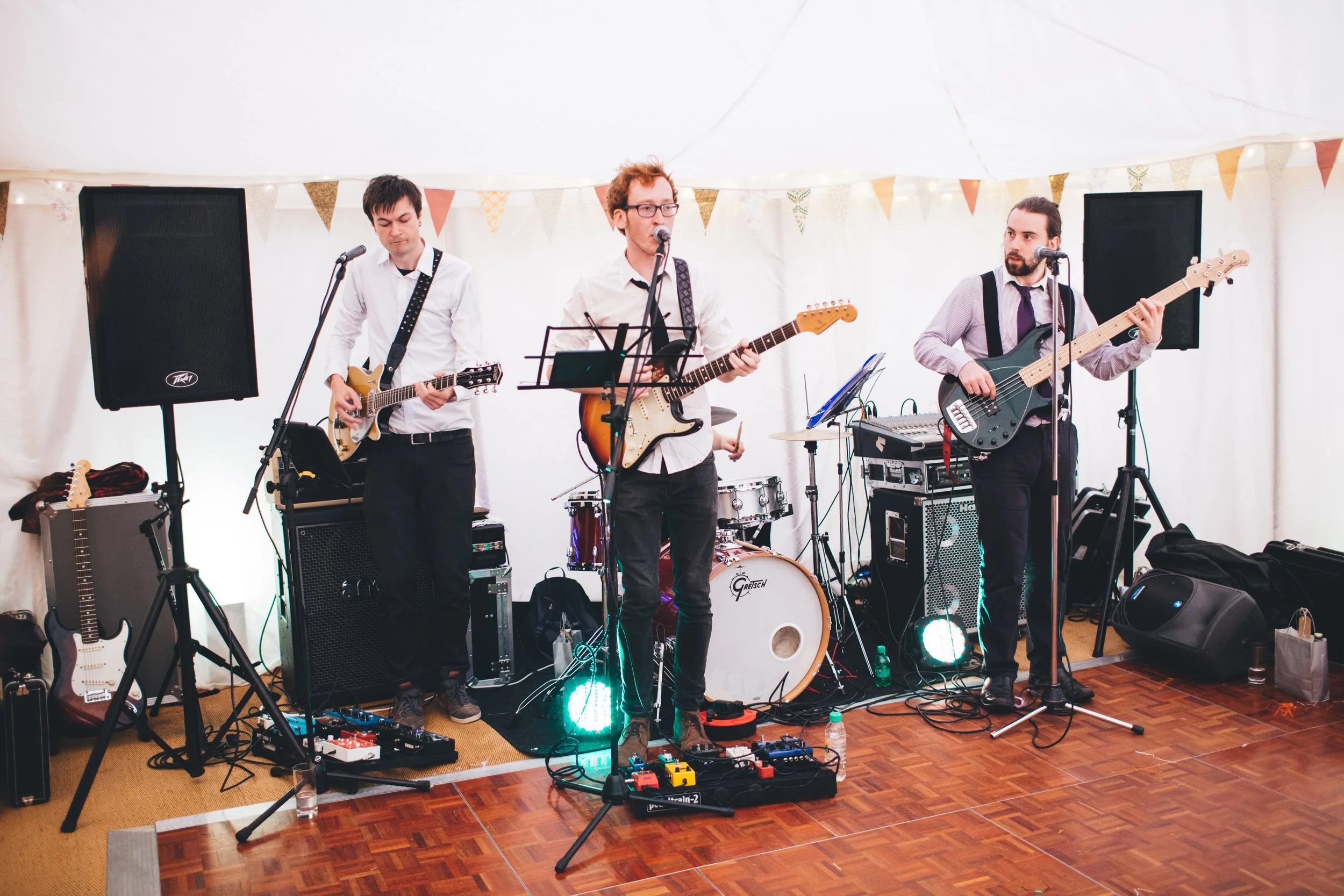
a dedicated dance floor area
bar positioned so queues don’t cut across the marquee
a “standing edge” around the dance floor (people naturally gather here)
This is the big win of 21m length: you can give dancing its own identity.
Layout options for different wedding styles
Layout A: Classic round-table reception
Best for: 90–110 guests
Experience: traditional, comfortable, easy for guests
Zone 1: welcome + a couple of perch tables
Zone 2: round-table dining (the heart of the marquee)
Zone 3: bar + dance floor + DJ/band
Why it works: Guests always know where to go, and circulation stays clear even as the day changes pace.
Layout B: Long-table “feast” with a strong dance zone
Best for: 100–110 guests
Experience: editorial, high-end, social
One long table (or two parallel) creates clean lines and strong sightlines
Leaves a clearer end zone for dancing + bar
Best detail: Long tables can free up space for a slightly larger dance floor — which is often what couples remember most.
Layout C: Ceremony + reception in one marquee (low-stress planning)
Best for: smaller weddings within this size (or couples who are happy with a reset)
Experience: all-weather reassurance
Two comfortable approaches:
Ceremony at one end → drinks outside → dining reset
Ceremony seating is removed while guests are outside
Ceremony zone becomes lounge/bar zone
You keep some furniture and transform the vibe without a full flip
Planning truth: If you’re doing both ceremony and full reception inside one 9m x 21m, the success is in the timings and the staffing — it’s very hooking when coordinated well.
Planning notes that matter in 9m width
Bar placement is everything
In a 9m span, a poorly placed bar creates the most common “why does it feel busy?” problem.
Best: bar at an end, with open space in front for queues
Avoid: bar in the middle of the long side unless you have very deliberate circulation routes
Poles: use them as “anchors”
Don’t fight pole lines; design around them.
place tables so chairs aren’t trapped against poles
use poles for styling and lighting to make structure feel intentional
Keep one clear “spine route”
Guests move between zones repeatedly (loos, bar, seats, dance floor). Plan one route that stays clear all evening.
Styling a 9m x 21m pole marquee so it feels luxurious
This length allows you to style in “chapters” rather than trying to make every metre look like a Pinterest board.
What works beautifully
a strong entrance moment (lanterns, meadow, framed signage)
layered lighting that changes by zone:
warm dining glow
slightly moodier dance lighting
one hero installation (over dining or dance floor)
How to make it feel intimate (not like a long corridor)
use ceiling décor and lighting to break up the length
add a lounge cluster near the transition between dining and dancing
avoid pushing everything to the perimeter — it makes the centre feel empty
Weather-proofing: making the marquee work all day
A 9m x 21m is particularly good for UK weather because it can comfortably hold:
arrivals and welcome drinks if it rains
a full dinner setup
and dancing, without needing everyone to be outside for breathing space
Practical touches that elevate comfort:
a dry entrance and covered route to loos
a defined coat/storage solution (even a simple staffed rail in a corner)
warm lighting and soft furnishings to avoid a “bright tent” feel late evening
When to choose 12m width instead
Choose a 12m x 18m or 12m x 24m if:
you want noticeably wider aisles and more “air”
you’re planning a more lounge-led layout
you have a higher guest count and you want everything to feel effortless
you want to minimise any feeling of “working around” poles in sightlines
9m x 21m is wonderfully capable — 12m widths are where it starts to feel undeniably spacious.
FAQs: 9m x 21m wedding marquee
What size marquee do I need for 100 guests?
A 9m x 21m is a very common comfort-first choice for 100 guests when you want dining plus a bar and dancing in the same marquee.
How many guests can sit in a 9m x 21m marquee?
Comfort-first, typically 90–110 seated, depending on table style and how much extra space you allocate for a bar, lounge seating, or a dance floor.
Can you fit a band in a 9m x 21m marquee?
Yes, especially if you plan a dedicated dance zone and keep the bar and queues out of the main circulation routes.
Is 9m x 21m big enough for ceremony and reception?
Often yes, particularly for couples who are happy with a reset between ceremony and dining, or who plan the ceremony zone to transition into a lounge/drinks area.
Will it feel too long and narrow?
It doesn’t have to. The key is zoning: break the length into “rooms” with lighting, furniture clusters, and clear transitions.