
9m x 15m Wedding Marquee: A Comfort-First Guide to Traditional Pole Marquee Layouts
A 9m x 15m traditional pole marquee is one of the most useful sizes for UK weddings because it sits in that sweet spot: large enough to host a proper wedding breakfast for a medium guest list, but still intimate and easy to style in a private garden or at home.
Where a 9m x 9m works best as a single-purpose space, a 9m x 15m can start to do two jobs well — for example dining plus a bar, or ceremony plus drinks reception, without everything feeling squeezed.
This guide focuses on what’s unique about this size: how it behaves inside a 9m span, what layouts flow best, and how to plan a luxury experience with sensible circulation and “zones”.
Why choose a 9m x 15m traditional pole marquee?
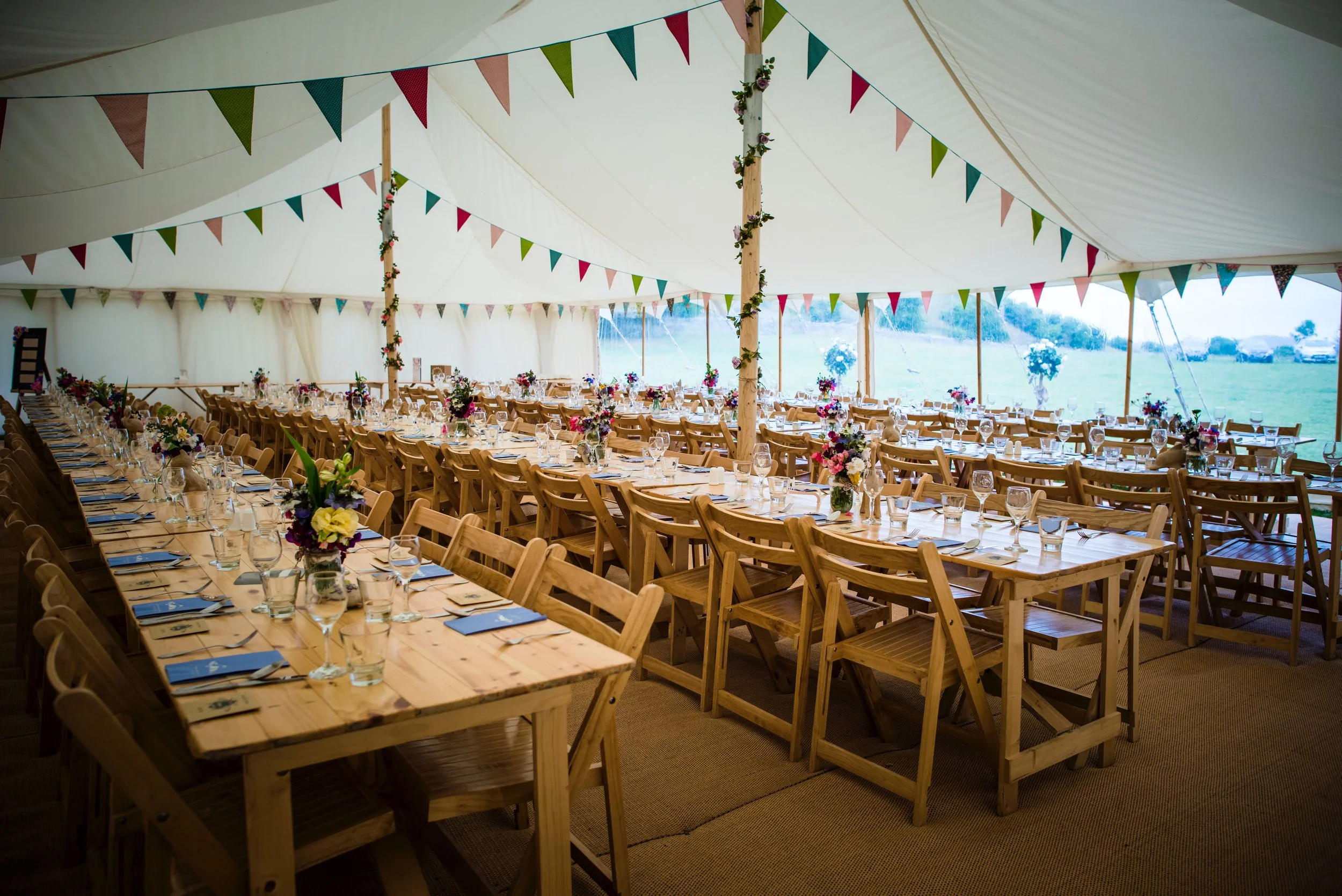
This size is popular because it supports a “proper wedding” structure without needing a huge site footprint. It’s especially well-suited to:
home and garden weddings
couples who want a refined dining experience and a comfortable social flow
A 9m x 15m is also forgiving. If your guest count shifts slightly, or you decide late on that champagne tower or lounge corner, you have more flexibility than a 9m x 9m — without jumping to a much longer marquee.
How big is a 9m x 15m marquee?
A 9m x 15m marquee provides:
135 m² of floor area (9 × 15)
But what matters is how that space can be used in a 9m span:
9m width tends to suit a “two-lane” layout (two rows of tables, or tables plus a clear service route).
15m length gives you enough room to create a distinct end zone (often a bar or a styling feature) while keeping dining centred.
This “end zone” capability is what makes a 9m x 15m feel meaningfully more versatile than a 9m x 9m.
9m x 15m wedding marquee capacity
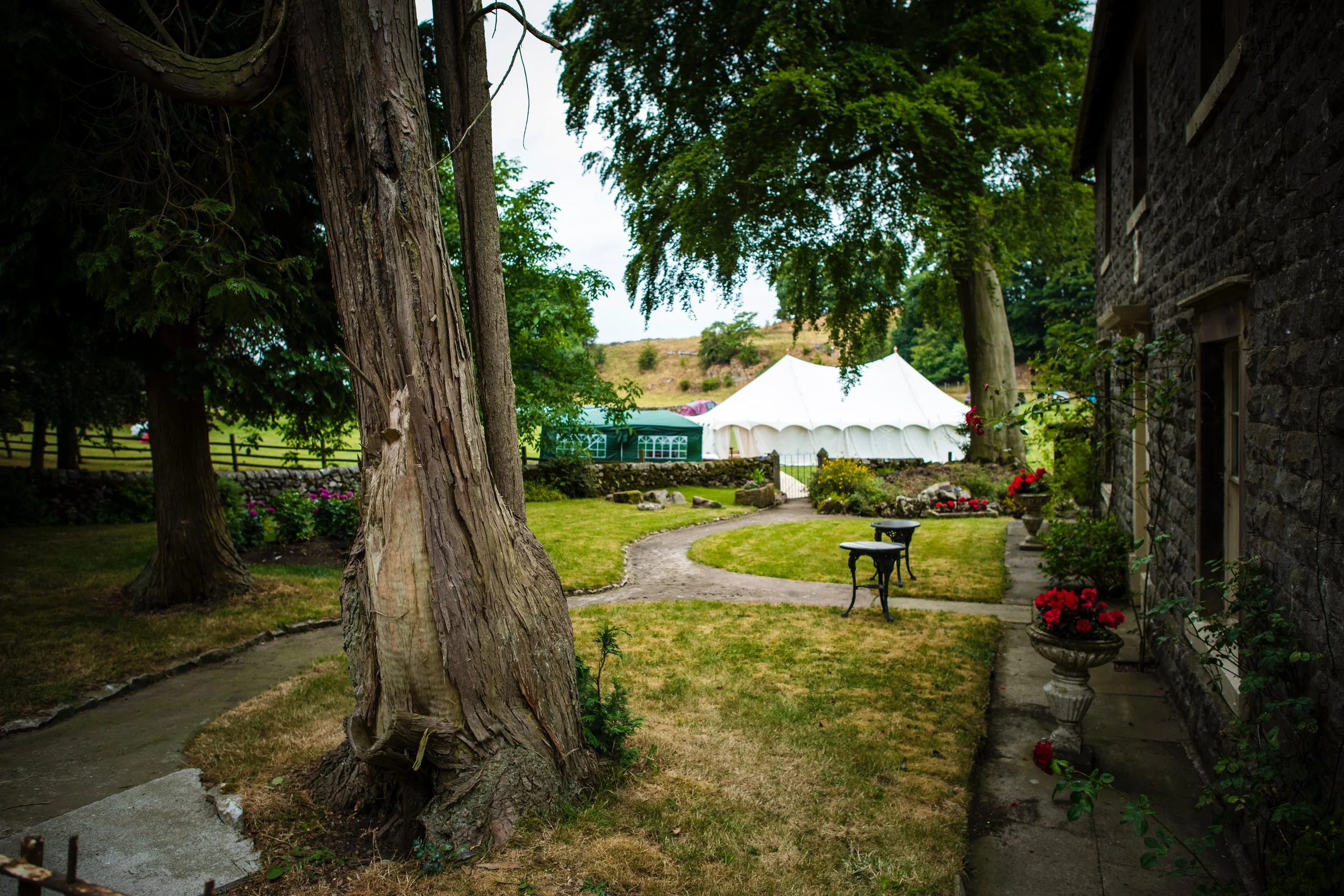
A comfort-first approach assumes:
generous chair pull-out space,
sensible aisle widths,
room for staff to serve smoothly,
and at least one small “extra” zone (bar, welcome area, or styling moment).
Ideal seated guest capacity
60–70 guests feels beautifully comfortable with round tables and clear circulation
70–80 guests works well if you use space efficiently (especially with long tables or fewer add-on zones inside)
Ideal standing / drinks reception capacity
90–120 guests for relaxed standing drinks (with some furniture and a bar)
120–135 guests is possible for a shorter drinks reception if the interior isn’t heavily furnished
If you’re planning a drinks reception for 120+ and you also want lounges, a big bar, or indoor entertainment, you’ll usually prefer more length.
What this marquee size is best for
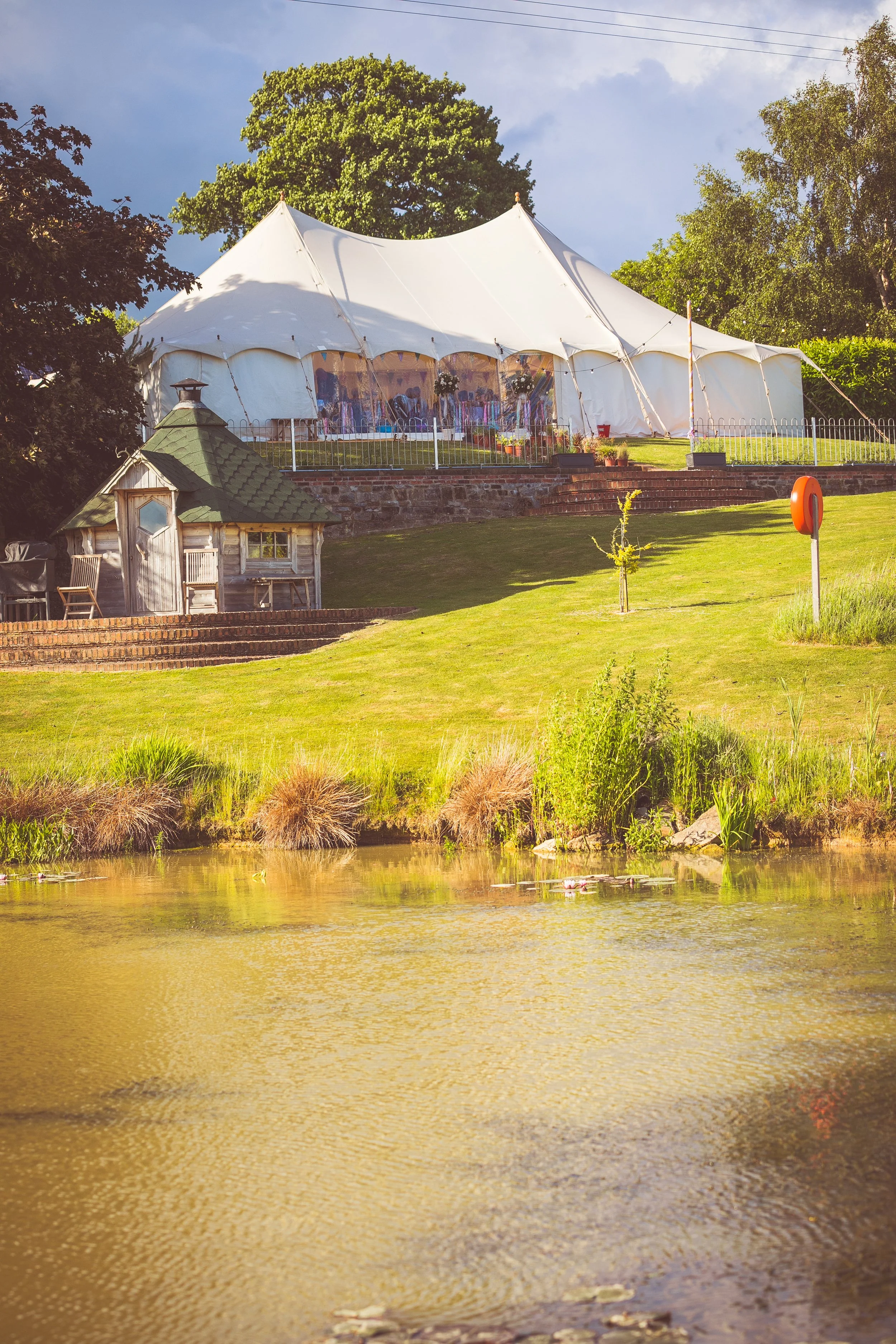
A 9m x 15m shines when you want structure and comfort without an oversized build.
Best-fit wedding uses
Wedding breakfast (dining) as the main function
Ceremony + drinks reception (with no stressful room flip)
Dining + a bar inside the same marquee
A reception-focused marquee where dancing happens later (either lightly inside, or in a separate space)
Less ideal for
Dining and a full dance floor and band all in one (you can do it, but you’ll feel the compromises)
Very lounge-heavy setups (sofas, coffee tables, snug corners) alongside full dining
For those, a 9m x 21m generally feels more effortless.
The layouts that work best in a 9m x 15m
What makes this guide different is the emphasis on flow and zoning. A 9m x 15m doesn’t need to be a single “grid of tables”. It can be planned like a miniature venue.
Below are layout patterns that consistently work in this footprint.
Layout A: Wedding breakfast with round tables (classic)
Best for: 60–75 guests
Look: timeless, balanced, very “wedding”
How it flows
Dining occupies the central length of the marquee
A small entrance/welcome area at one end
Service routes run cleanly along the sides and between table groupings
Why it works in 9m x 15m
The length allows dining to sit comfortably without the space feeling like “all tables, no air”.
You can keep a clear route from entrance → seats without people cutting through table clusters.
Planning note
If you’d love a bar inside too, keep it compact and position it at an end, not mid-length. Mid-marquee bars almost always interrupt movement in a 9m span.
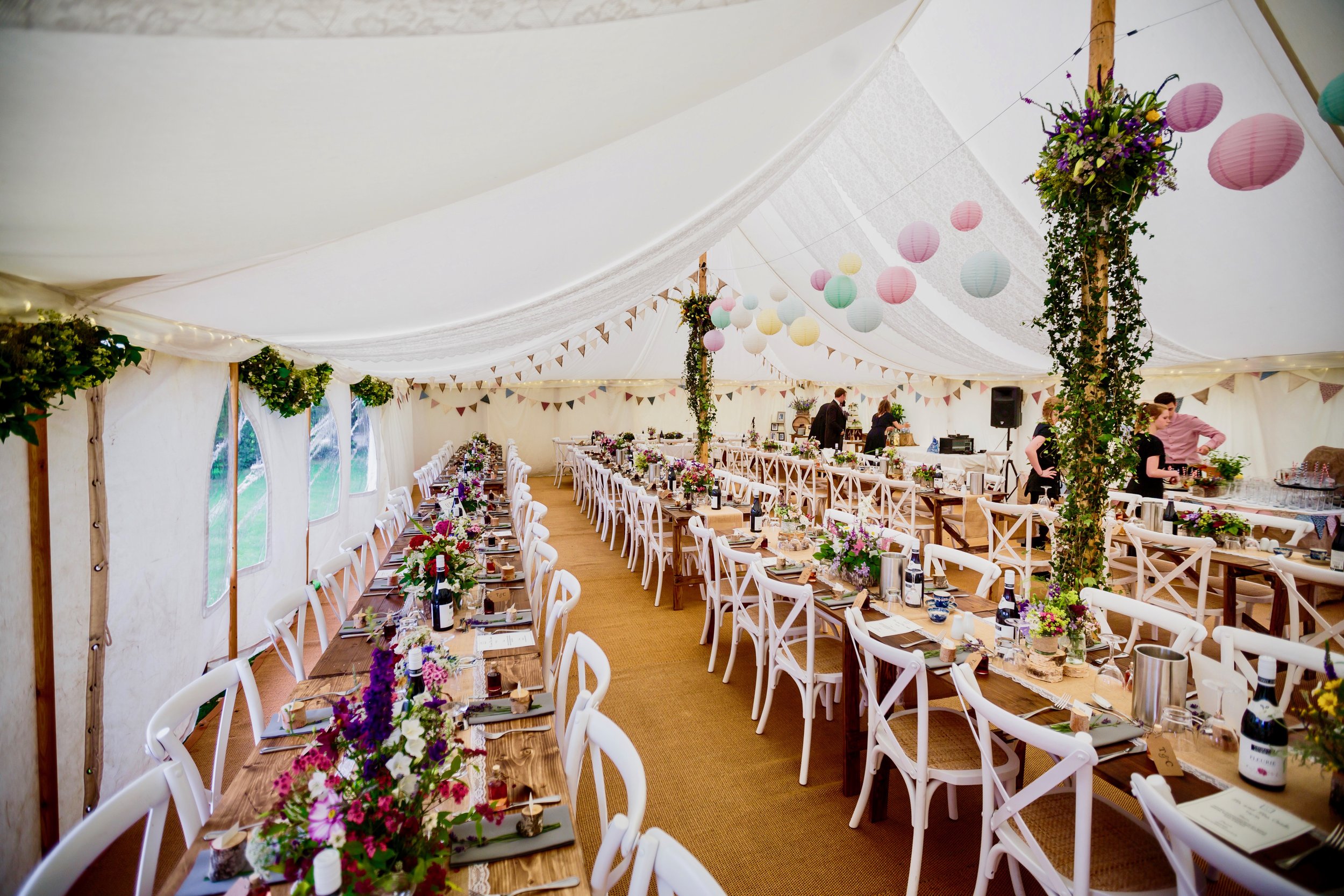
Layout B: Banquet tables + generous central aisle (editorial)
Best for: 70–80 guests
Look: modern-classic, styled, “country house dinner party”
Concept
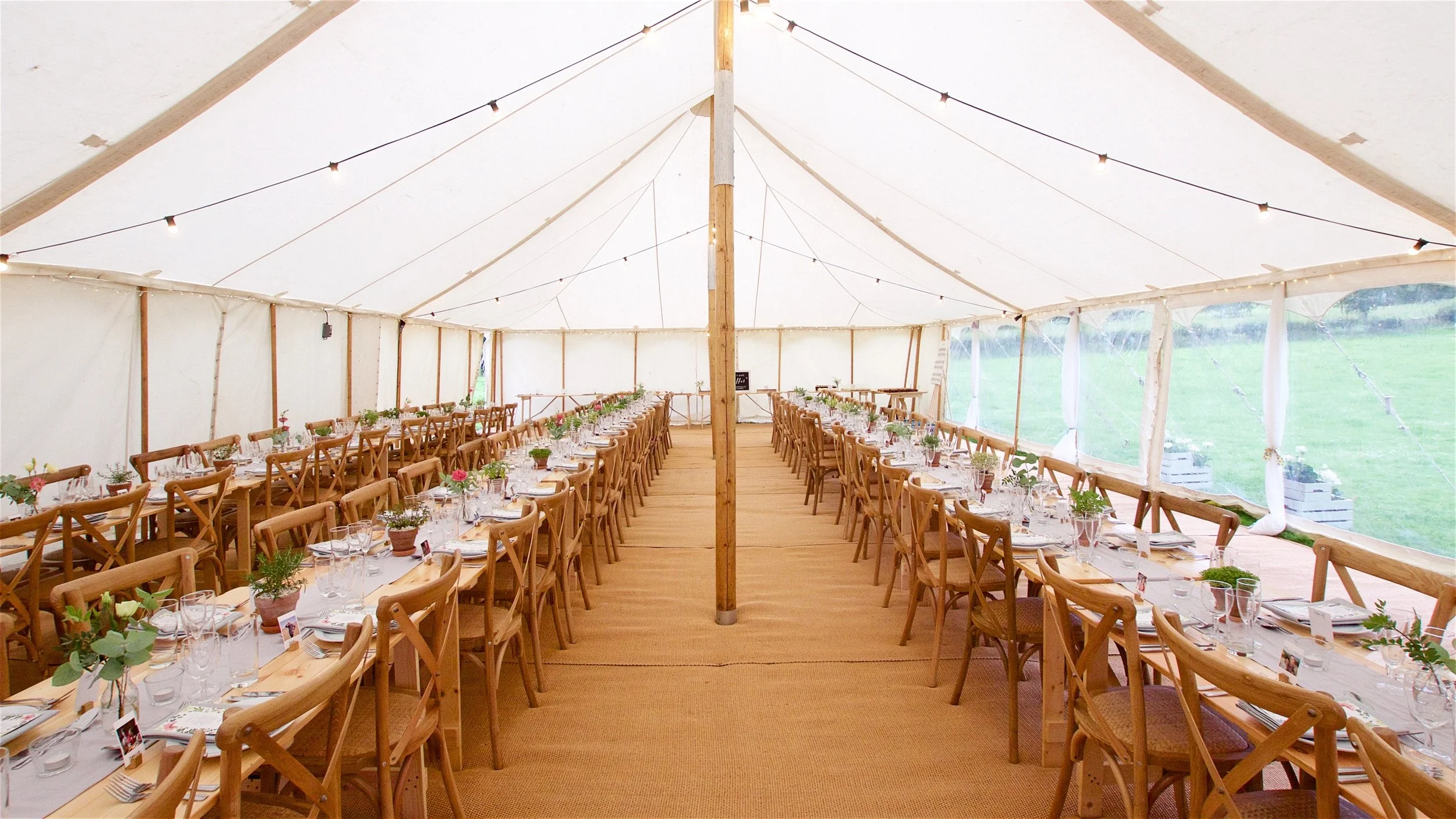
One long table down the centre or
Two long tables parallel with a statement aisle between
Why it’s uniquely good for this size
A 15m length makes banquet styling feel intentional, not squeezed.
You get clear sightlines and a natural “processional” feel (great if you’re doing speeches in the same space).
Luxury comfort tip
Keep the ends of the tables clear enough for staff to serve without repeatedly brushing chairs — it’s a small detail, but guests notice.
Layout C: Ceremony + drinks reception (no room flip stress)
Best for: 70–120 guests across the two moments
Look: calm, welcoming, weather-proof
How it works
One end: ceremony seating with a proper aisle and focal point
Other end: drinks/bar zone with a few perch tables or lounge pieces
Why couples love this
If the weather changes, you’ve already got a comfortable indoor plan.
Guests naturally transition from ceremony → drinks without a full reset.
Key to making it feel premium
Keep the ceremony end uncluttered and symmetrical.
Keep drinks furniture “light” (perch tables, a couple of sofas) rather than trying to build a full lounge.
Layout D: Dining + “after dinner” dancing (light-touch)
Best for: 60–70 guests
Look: intimate dinner that turns into a party
Reality check
This is not the same as having a dedicated dance floor from the start. It’s:
dining first
then a modest dance area once some tables clear or chairs shift
How to make it work
Plan dining with a deliberate open zone near one end (even if it’s empty during dinner)
Put the DJ in a corner to avoid blocking movement
Keep the bar positioned so it doesn’t create a queue through the dance area
If dancing is a main priority
You’ll generally feel happier in a 9m x 21m, especially with 80+ guests.
Comfort planning: the details couples forget
This is where a 9m x 15m often succeeds or struggles.
1) Bar queues need a home
A bar isn’t just the counter — it’s the standing space in front of it.
Put the bar at an end where a queue can form without blocking the marquee’s main routes.
Avoid placing it midway along the long side in a 9m span unless you have a separate circulation plan.
2) Service routes aren’t optional
Even in luxury weddings, the most common “cramped” feeling comes from staff trying to serve through tight gaps.
Prioritise at least one clean service route that doesn’t rely on squeezing behind chairs.
3) The entrance needs breathing space
A marquee entrance is where:
guests arrive,
read signage,
look for seats,
collect a drink,
greet each other.
Even a small welcome zone makes the whole day feel calmer.
4) If you’re planning speeches, plan the sightlines
In a 9m width, where you place the top table (or sweetheart table) changes everything:
choose a position where most guests can see without turning in their chairs awkwardly,
and avoid placing speakers directly behind a pole line.
Practical site considerations for 9m x 15m
Garden footprint and access
A 9m x 15m is manageable on many private sites — but you still need to consider:
access for vehicles and installation
ground levels (even small slopes affect table setups)
drainage and soft ground in wet seasons
Guy ropes and perimeter space
Traditional pole marquees require guying space around the marquee footprint, so the usable garden area must be larger than 9m x 15m. This is often the deciding factor for tighter gardens.
Flooring choices change the feel
If you’re aiming for luxury:
boarded flooring creates a level base and makes dining feel more like an indoor venue
it also improves comfort if weather turns damp or cool
When to choose 9m x 21m instead
Move up to a 9m x 21m if:
your guest list is regularly 80+
you want a proper dance floor from the start (not a “later” arrangement)
you’re having a band and want space for guests to gather without blocking circulation
you want dining plus a noticeable lounge area
In other words: if you want your 9m x 15m to do three jobs (dining + bar + dancing), the 9m x 21m usually does it with far fewer compromises.
FAQs: 9m x 15m wedding marquee
Is a 9m x 15m marquee big enough for 80 guests?
Yes, often, especially for dining-focused weddings. For 80 guests with round tables and a large bar or a dedicated dance floor, it can feel tight. Long tables or fewer “extras” inside make 80 far more comfortable.
What’s the best layout for a 9m x 15m wedding marquee?
For most couples, the most comfortable layout is dining centred, with one end used as a welcome or bar zone. Keeping the middle clear for movement is key in a 9m span.
Can I have a dance floor in a 9m x 15m marquee?
You can, but it works best as a light-touch dance setup (especially for 60–70 guests). If dancing is a major priority or you have 80+ guests, consider 9m x 21m.
Is 9m width too narrow?
Not at all, it’s classic for pole marquees. The key is planning circulation properly and avoiding mid-marquee obstacles like bars or bulky lounge furniture.
Can a 9m x 15m work for a ceremony and reception?
It can for smaller weddings, but for most couples it’s more comfortable for ceremony + drinks, or reception dining + later dancing. Ceremony + full reception in one space usually benefits from more length.