
Furniture and Finishing Touches for Marquee Weddings in Cheshire: A Complete Guide
Planning a marquee wedding offers couples a level of flexibility that traditional venues often cannot provide. Across Cheshire, many couples choose to host weddings in gardens, private estates, farms, and open countryside, using marquees to create a temporary venue that suits their vision. However, while a marquee provides the structure, it is the furniture, flooring, lighting and practical finishing touches that turn it into a comfortable and functional space for a full day of celebrations.
Unlike permanent venues that already contain flooring, seating and lighting, a marquee is essentially a blank canvas. Every element, from how guests walk into the space, to where they sit, dine, dance and socialise, needs to be carefully planned. The choices couples make around furniture and layout influence not only the appearance of the marquee but also how well the day flows for guests.
This guide explains the main furniture and finishing touches typically used for marquee weddings around Cheshire. By understanding how each element works and when it is needed, couples can plan a marquee setup that is both practical and welcoming for their guests.
Flooring Options for Wedding Marquees
Flooring is one of the most important considerations when setting up a marquee wedding. Many outdoor venues across Cheshire involve lawns, gardens or fields, which can become uneven, damp or muddy depending on the weather. Installing the right flooring ensures the marquee remains comfortable and accessible for guests throughout the event.
Matting
Matting is the most basic flooring option used in marquees. It is typically installed directly onto the grass and provides a clean, flat walking surface throughout the interior. Matting helps prevent guests from walking directly on damp ground and stops high heels from sinking into soft lawns.

For summer weddings on well-maintained lawns, matting can be a practical solution that keeps costs manageable while still improving comfort. It works particularly well for daytime receptions or relaxed garden-style celebrations where couples want to maintain a natural feel to the space.
However, matting does follow the contours of the ground beneath it. If the venue has uneven surfaces, slopes or areas prone to waterlogging, a more robust flooring system may be preferable. While matting improves conditions compared to bare grass, it does not create a fully level floor.
Wooden Flooring
Wooden flooring is commonly used for marquee weddings where couples want a more stable and venue-like environment. A wooden subfloor is built across the marquee footprint, creating a completely level surface regardless of the ground beneath it.
This type of flooring is particularly beneficial for countryside venues across Cheshire where the ground may be uneven. The rigid base improves stability for tables, chairs, bars and staging, and it allows guests to walk comfortably throughout the space.
Wooden flooring is also useful when planning formal dining layouts, dancefloors or areas with heavy equipment such as bands and DJ setups. Once the subfloor is installed, it can be covered with carpet or left as a polished wood finish depending on the style of the event.
For weddings taking place during cooler months or unpredictable weather conditions, wooden flooring also provides better insulation and helps maintain warmth within the marquee.
Tables for Marquee Weddings
Tables play a central role in how the interior of a marquee is organised. Because the layout is entirely customisable, couples can choose table styles and arrangements that best suit their guest numbers, catering style and overall event flow.
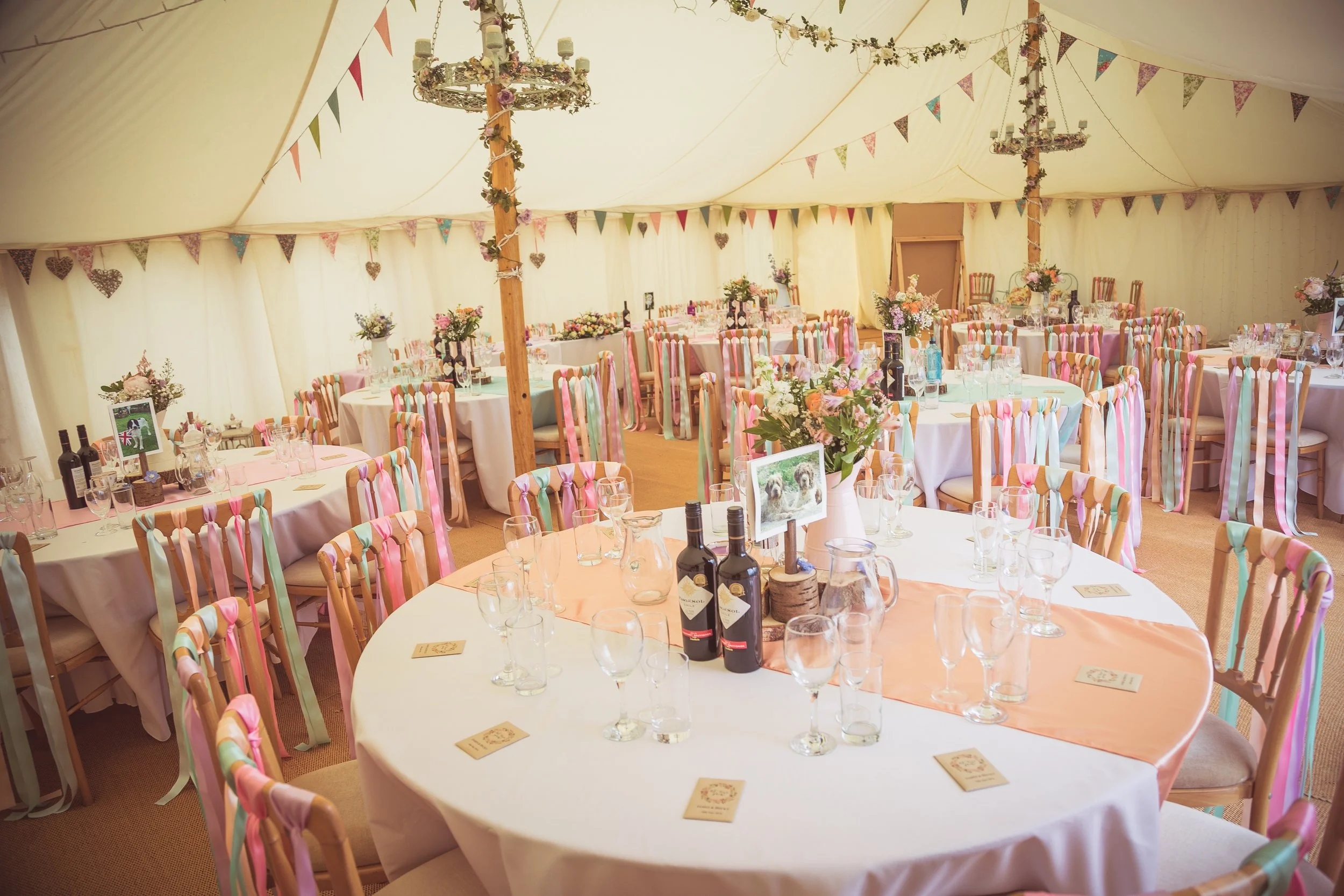
Round tables remain the most common choice for wedding receptions. They typically seat between eight and ten guests, allowing everyone at the table to comfortably converse with one another. Round tables also make it easier to create balanced layouts within the marquee, leaving clear pathways between tables for guests and serving staff.
Rectangular banquet tables are sometimes chosen for a more informal or communal dining experience. These tables can accommodate longer groups and are often used when couples want a relaxed layout that feels similar to a long family meal.
When planning table layouts inside a marquee, space is an important factor. Caterers require adequate room to move between tables during service, and guests should be able to circulate easily throughout the venue. Tables placed too closely together can make the marquee feel cramped, especially once chairs, decorations and place settings are added.
Another consideration is how the tables interact with other areas of the marquee. The dancefloor, bar, stage and catering access points all influence where tables should be positioned. A well-designed layout allows guests to move between dining, dancing and social areas without congestion.
Many marquee providers work with couples to design table plans that maximise both capacity and comfort within the available space.
Chairs and Guest Seating
Chairs are another element that influences both comfort and the overall look of a marquee wedding. Because chairs are used throughout the ceremony, dining and evening reception, they play a visible role in the overall design of the space.
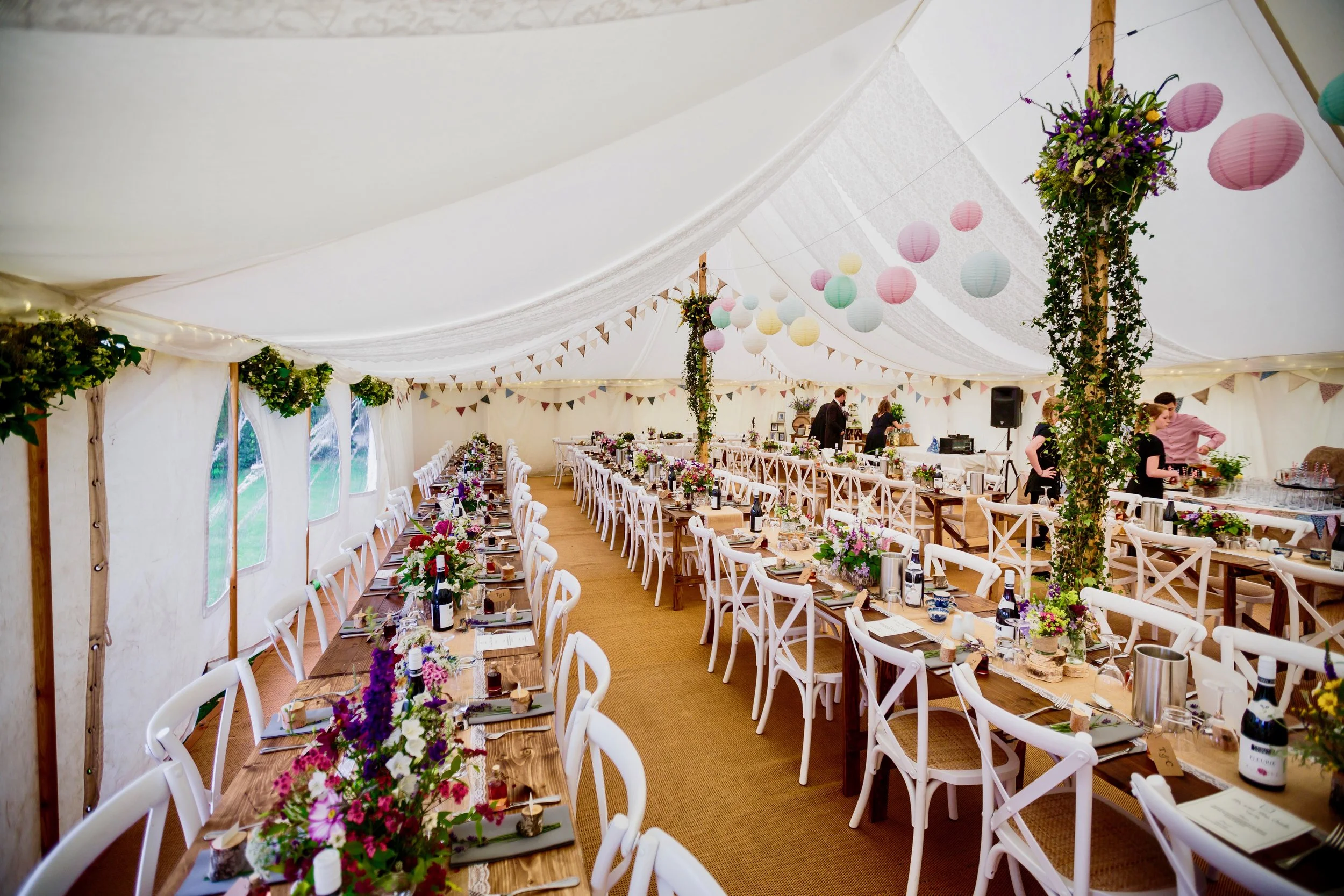
Traditional banqueting chairs are commonly used for wedding receptions. They are designed to provide comfort during longer seated periods such as speeches and meals, while also being easy to arrange around tables.
For ceremonies held within the marquee, couples often use the same chairs as the reception to maintain consistency across the event. Alternatively, some choose different seating styles for the ceremony area to create a distinct focal point before guests move to the dining space.
Comfort is an important consideration when selecting chairs. Weddings often involve guests being seated for extended periods, particularly during the meal and speeches. Chairs with padded seats or supportive backs help ensure guests remain comfortable throughout the day.
The style of chair also affects the visual tone of the marquee interior. Wooden chairs can create a relaxed countryside atmosphere that suits rural Cheshire settings, while more formal seating styles complement elegant marquee interiors with chandeliers and structured layouts.
Lighting for Marquee Weddings
Lighting serves two important purposes in a marquee: providing sufficient illumination for practical tasks and shaping the overall atmosphere of the space. Because marquees are temporary structures, all lighting must be installed specifically for the event.
Festoon Lighting
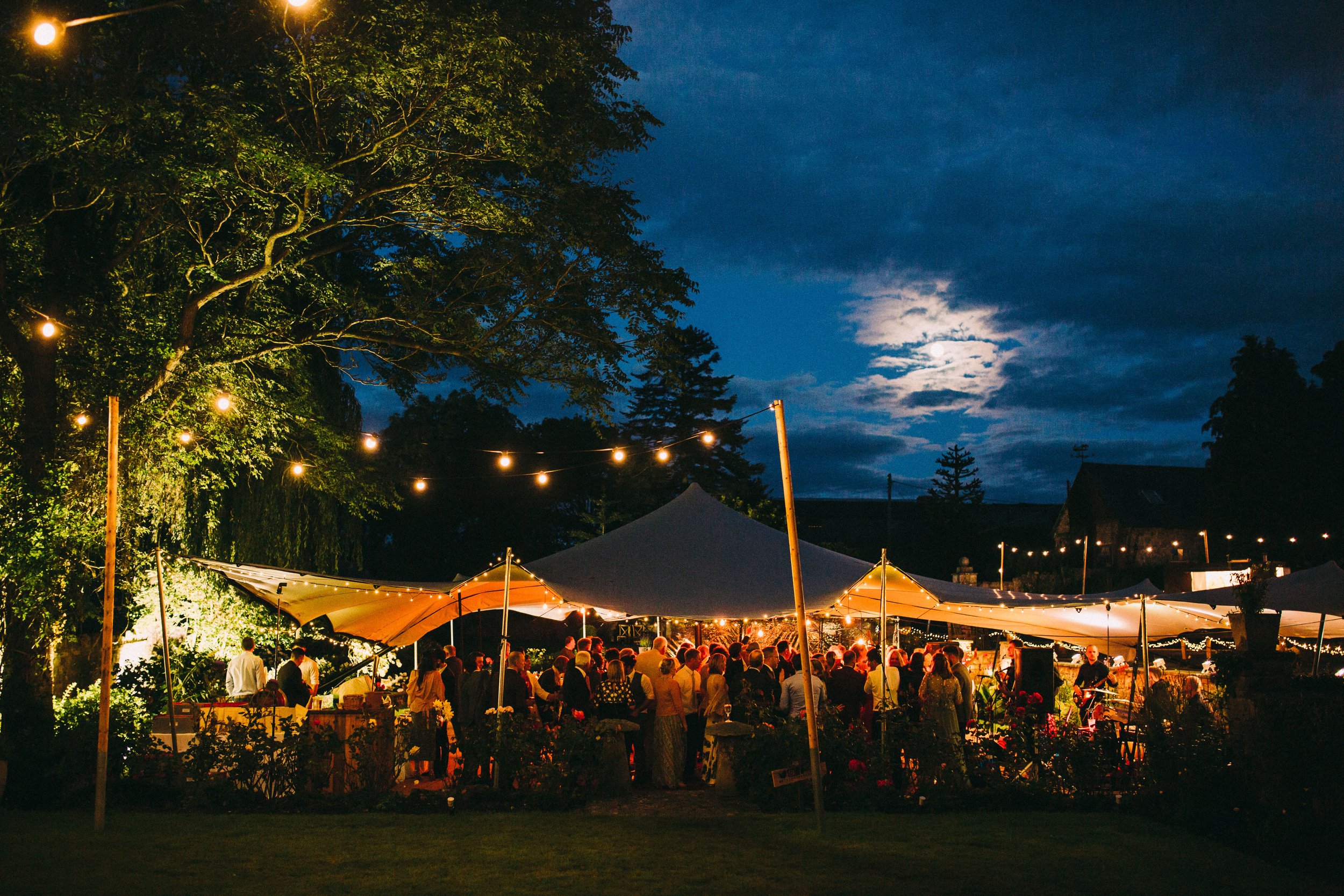
Festoon lighting is widely used in marquee weddings due to its versatility. The strings of exposed bulbs create soft, even lighting across the ceiling and can help define the shape of the marquee interior.
This type of lighting works well for evening receptions and can also be extended outside the marquee to illuminate pathways, seating areas or garden spaces.
Chandeliers
Chandeliers are often installed in the centre of marquee sections to provide a more formal lighting feature. They create a focal point above dining tables or dancefloors and can help break up the open space of the marquee roof.
Chandeliers are commonly used in traditional marquee interiors where couples want the space to resemble a permanent venue rather than a temporary structure.
Uplighting
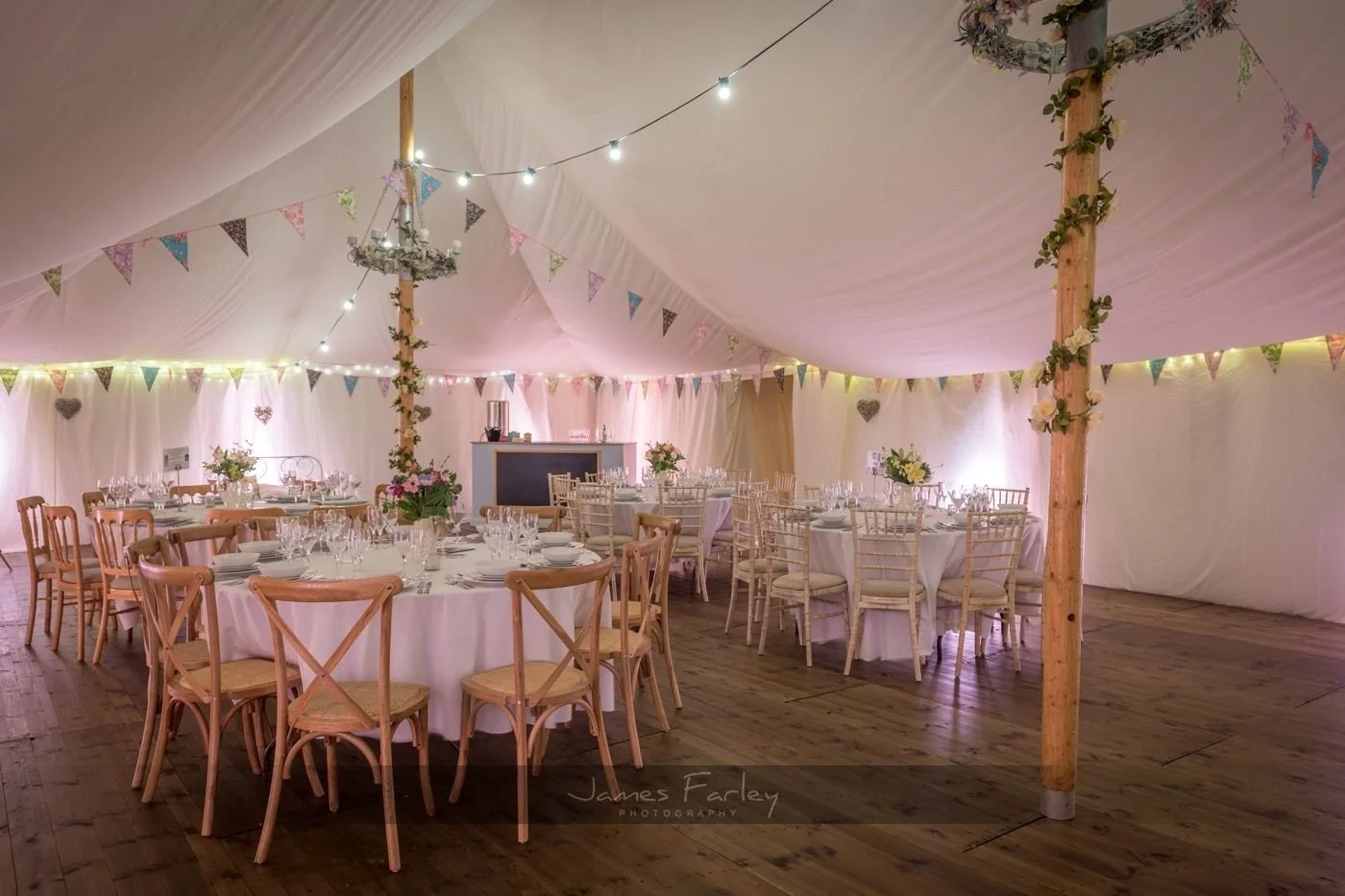
Uplighting is used to highlight the interior framework of the marquee or surrounding features such as trees and architectural elements. Lights positioned around the edges of the marquee project colour upwards onto the walls and ceiling.
This technique allows couples to introduce subtle colour themes and creates depth within the space as daylight fades.
Functional Lighting
Practical lighting is equally important. Areas such as entrances, bars, catering spaces and walkways require clear visibility to ensure guests can move around safely. External lighting is often installed along pathways or near parking areas to help guide guests after dark.
By combining decorative and functional lighting, couples can ensure the marquee remains both attractive and practical throughout the evening.
Heating for Marquee Weddings in Cheshire
Even during warmer months, evenings in the UK can become cool. Heating is therefore an important consideration for marquee weddings in Cheshire, particularly for events running late into the evening.
Modern marquee heaters are typically positioned outside the structure and connected through discreet ducting. Warm air is circulated into the marquee, allowing the interior temperature to remain comfortable without taking up valuable floor space.
Heating systems are designed to distribute warmth evenly across the marquee, ensuring guests seated near entrances or edges do not experience cold drafts. The heaters can be adjusted depending on weather conditions and guest numbers.
For weddings taking place in spring, autumn or early winter, heating is usually essential. Even during summer events, many couples choose to include heating as a precaution in case temperatures drop later in the evening.
Dancefloors
The dancefloor is usually the focal point of the evening reception. It provides a dedicated space for dancing and helps define where entertainment will take place within the marquee.
Dancefloors come in various materials and finishes, including classic wooden parquet designs. The size of the dancefloor should be proportional to the number of guests attending the evening reception. If the dancefloor is too small, it can quickly become crowded once music begins. If it is too large, the space may feel empty.

Placement within the marquee is also important. Dancefloors are typically located near the stage or DJ booth to keep the entertainment area centralised. This arrangement allows guests seated at nearby tables to easily move between dining and dancing.
Lighting often plays a significant role in highlighting the dancefloor, with spotlights or coloured effects helping to create a lively evening atmosphere.
Stages for Bands and Entertainment
Many marquee weddings in Cheshire feature live bands or DJs during the evening reception. A stage provides an elevated platform that improves visibility and ensures performers have adequate space for their equipment.
For live bands in particular, stages help organise microphones, instruments and speakers in a structured area. This keeps cables and equipment away from guest walkways and reduces the risk of congestion around the performance area.
Stages also improve sound projection, allowing music to travel evenly throughout the marquee. Guests further from the front can still see the performers clearly, which helps maintain engagement across the whole venue.
The size of the stage will depend on the type of entertainment. Solo musicians require minimal space, while larger bands with drum kits and multiple instruments may need a more substantial platform.
Bars and Service Areas
Bars are an important focal point during the reception and evening celebrations. Their placement within the marquee influences how guests circulate through the space.
A well-positioned bar should be easily accessible but not obstruct main walkways or entrances. Many marquee layouts place the bar towards one side of the structure, allowing guests to queue comfortably without disrupting dining tables or the dancefloor.
Bars can vary in size depending on guest numbers. Larger weddings may require longer bar counters or multiple service points to avoid queues forming during busy periods.
In addition to the bar itself, couples should also consider space for glassware storage, refrigeration and staff working areas behind the counter.
Speakers and Sound Setup
Sound behaves differently in a marquee compared with a traditional indoor venue. The open structure means audio can disperse more quickly, so careful planning is required to ensure speeches and music remain clearly audible.
For speeches, microphones and speaker systems are often positioned so that sound reaches all seating areas without becoming excessively loud near the front tables. Wireless microphones are commonly used so speakers can move naturally while addressing guests.
During the evening reception, additional speakers may be placed around the marquee to ensure consistent coverage across the dancefloor and seating areas. This helps maintain balanced sound levels throughout the space.
Professional sound setup is particularly important when hosting live bands or DJs, as their equipment must integrate with the marquee’s power supply and acoustics.
Walkways and Access Areas

Many marquee weddings in Cheshire take place in gardens or fields where guests must walk across grass to reach the venue. Walkways provide a practical solution for keeping footwear clean and ensuring guests can move comfortably between different areas.
Walkways are often installed between parking areas, the ceremony location and the marquee entrance. They can also connect additional spaces such as toilets, outdoor seating areas or smaller reception tents.
By creating clear routes through the venue grounds, walkways improve accessibility and help guide guests around the site.
Outdoor Decorations and External Features
While much attention is often focused on the interior of the marquee, the surrounding outdoor space also plays an important role in the overall experience.
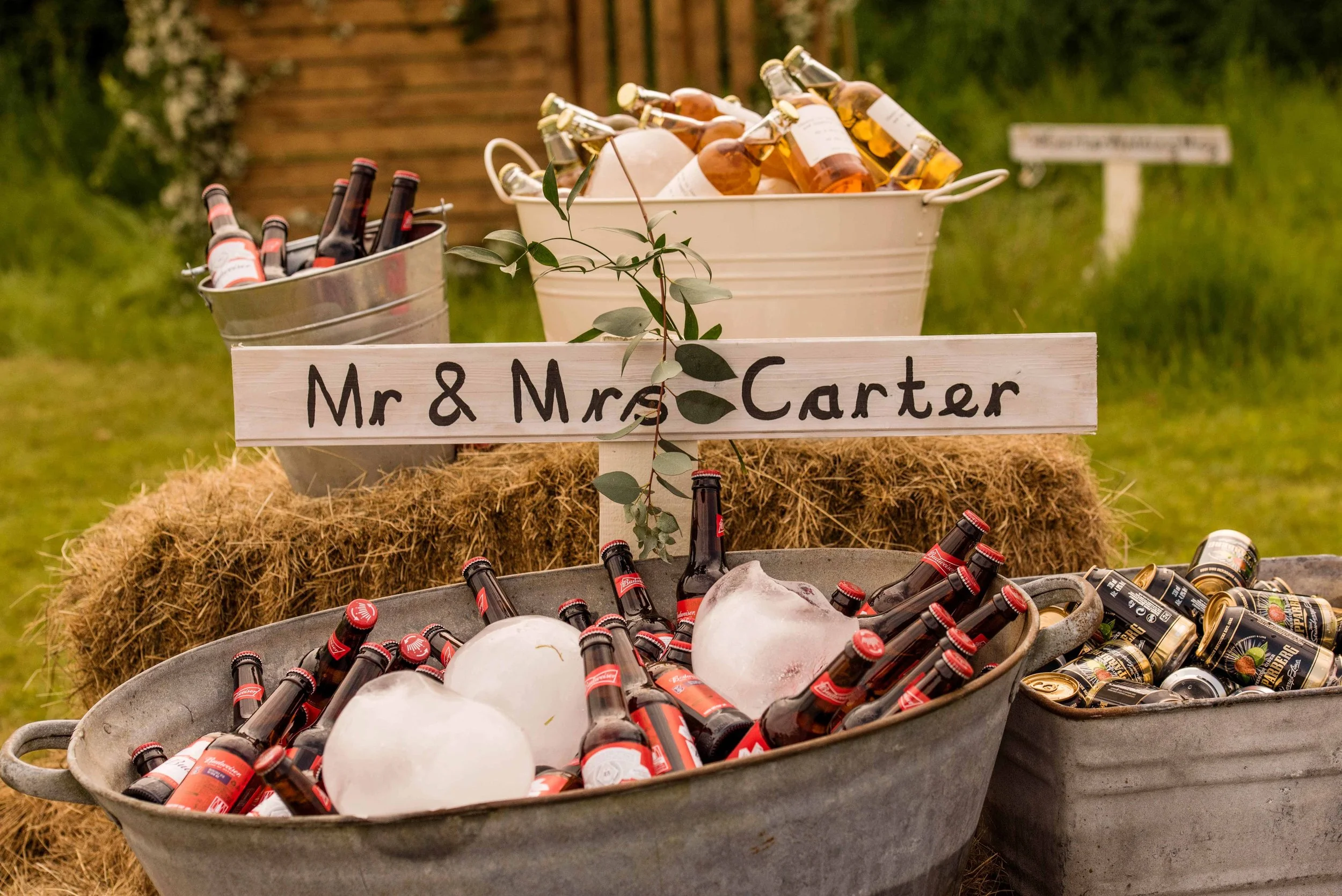
Entrance features such as lighting, signage or decorative arches can help guests locate the marquee and create a welcoming arrival point. In larger venues, subtle lighting along pathways and garden areas ensures guests can move safely after dark.
External festoon lighting is commonly used to highlight the outside of the marquee or surrounding trees and structures. This helps the venue remain visually appealing even once daylight fades.
Outdoor seating areas are another useful addition, particularly during summer weddings. Guests often appreciate having a quieter space outside the marquee where they can relax and talk away from the music.
Conclusion
Hosting a marquee wedding in Cheshire offers couples the flexibility to design a venue that suits their specific plans and location. However, creating a comfortable and functional space requires careful attention to the furniture and finishing touches that transform a marquee from an empty structure into a fully working event venue.
Flooring ensures guests can move comfortably regardless of ground conditions, while tables and chairs define how the dining area is organised. Lighting, heating and sound systems contribute to both atmosphere and practicality throughout the day and evening. Meanwhile, elements such as dancefloors, stages, bars and walkways help manage how guests move around the space.
By considering each of these components during the planning process, couples can ensure their marquee wedding runs smoothly and provides a comfortable environment for everyone attending. Thoughtful planning allows the marquee to function just as effectively as a traditional venue while offering the flexibility and setting that many couples in Cheshire are looking for.