
A wedding marquee gives you control over guest numbers, layout and timings in a way that fixed indoor spaces often can’t. It can work in a private garden, on venue grounds, or alongside existing buildings (for example, using a marquee for dining and an indoor space for dancing).
This guide explains the main marquee types, what couples should consider before booking marquee hire for weddings, and how two premium structures — Traditional Petal Pole marquees and Clearspan marquees - differ in practice.
Why Marquees Are Popular for Weddings
Couples usually start searching “wedding marquee” for one of three reasons: flexibility, capacity, or venue choice.
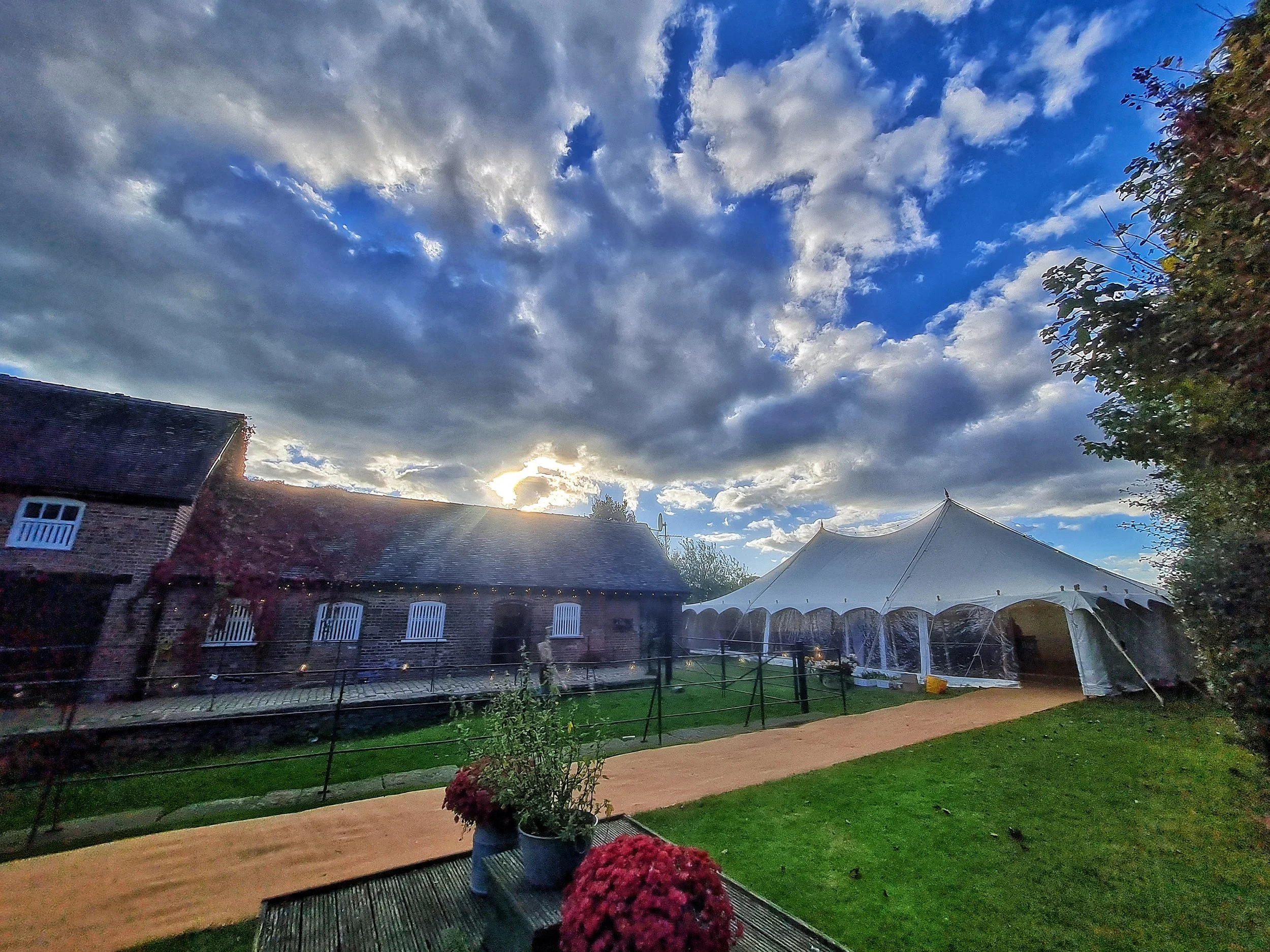
Flexibility (layout, timings, suppliers)
A marquee can be planned around your day rather than the other way round:
Separate areas for ceremony / drinks / dining / dancing
A bar positioned where you need it
Space for a band, DJ booth, staging, or a dancefloor
Catering layouts that match your menu style (plated, family-style, stations)
This matters because layout decisions often drive the practical requirements: entrance position, floor area, power distribution, and where service routes sit.
Aesthetics
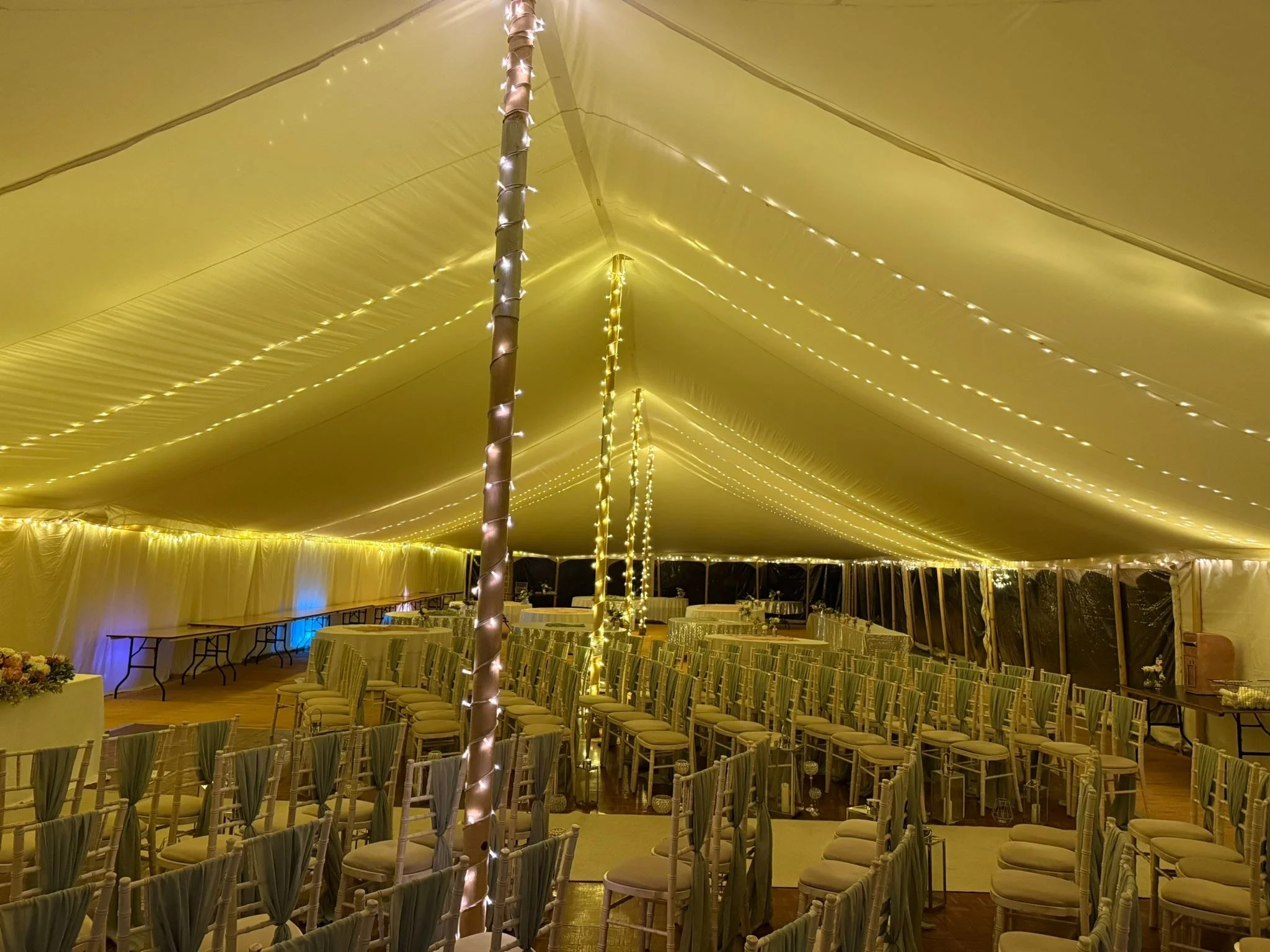
A marquee can be fitted out in many ways, but couples typically want clarity on what’s “structural” vs “styling”:
Structural choices: marquee type, size, door positions, anchoring method
Comfort & infrastructure: flooring, heating, power, toilets
Guest experience (comfort, flow, weather cover)
Guest comfort in a marquee is mainly determined by:
Weather planning (heat, rain, wind)
Flooring and access (especially for heels and prams)
Ventilation/heating approach
Lighting levels for dining and dancing
Clear routes to toilets, bar, and exits
Types of Wedding Marquees: Overview
There are several marquee families, and the same words are sometimes used differently by different suppliers.
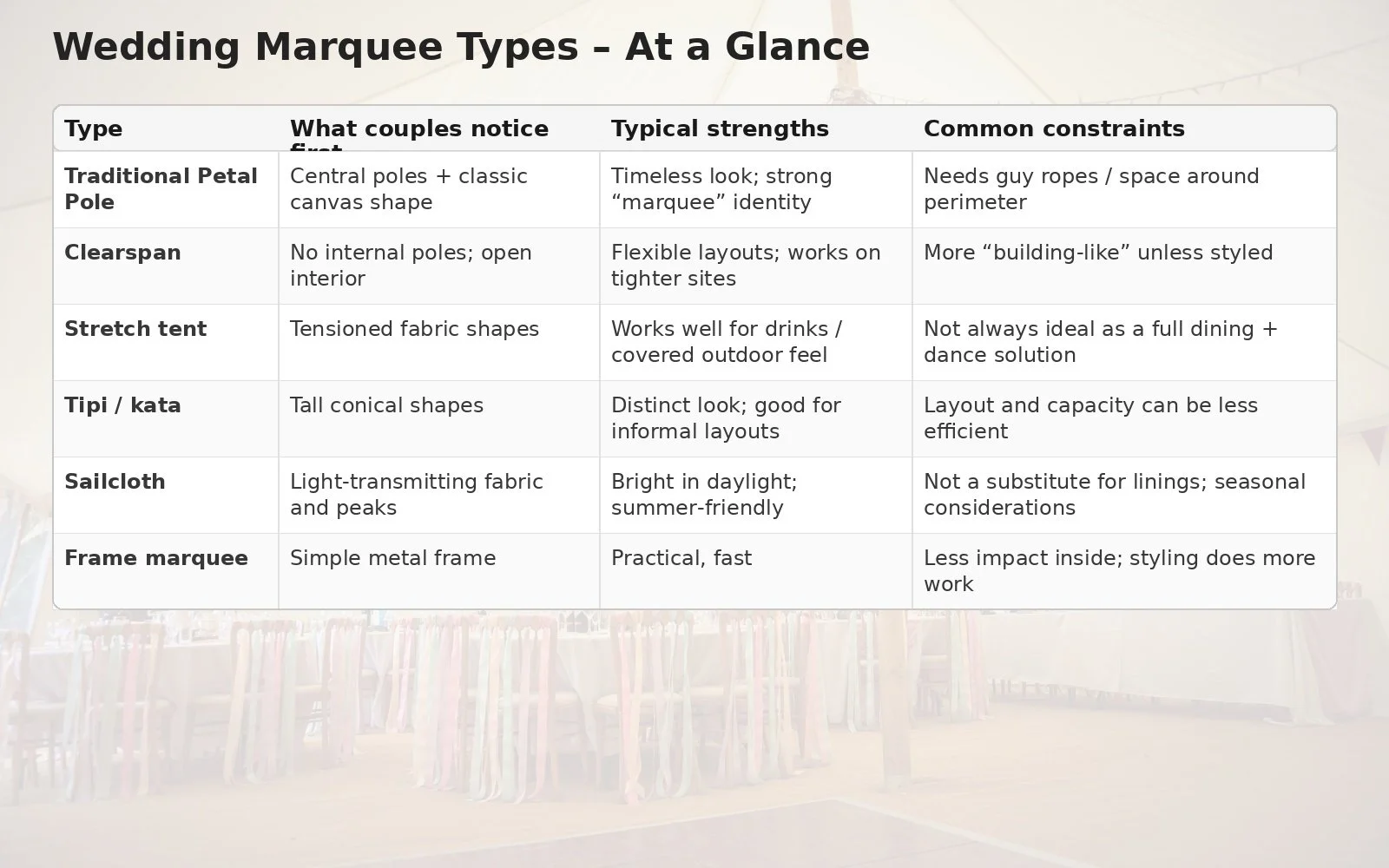
Traditional Petal Pole Marquees - What are they ?
A traditional wedding marquee (petal pole style) uses king poles and perimeter guy ropes. The shape and tension of the canvas are part of the final look, which is why many couples choose this structure specifically.
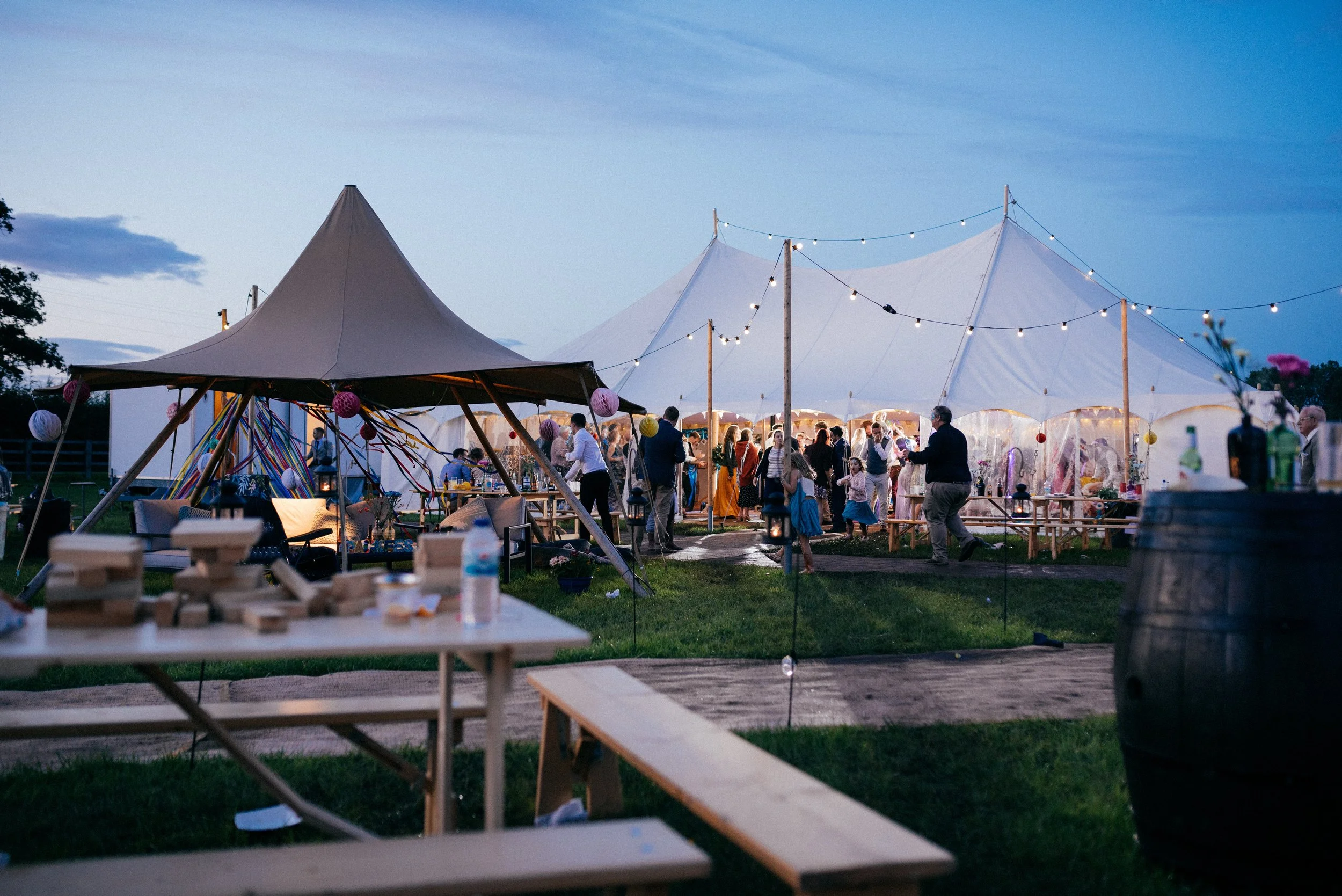
Key features couples should understand
Centre poles create the internal high points; plan your layout around them (tables, dancefloor, aisle lines).
Guy ropes anchor the marquee outside the footprint; you’ll need clear space around the perimeter.
Extendable layouts: traditional marquees are often built in “bays”, so length can be adjusted to suit guest numbers and zones.
Traditional finishes: linings and flooring choices change the feel substantially (see “Luxury” section below for an overview).
Style examples or tradtional petal marquees
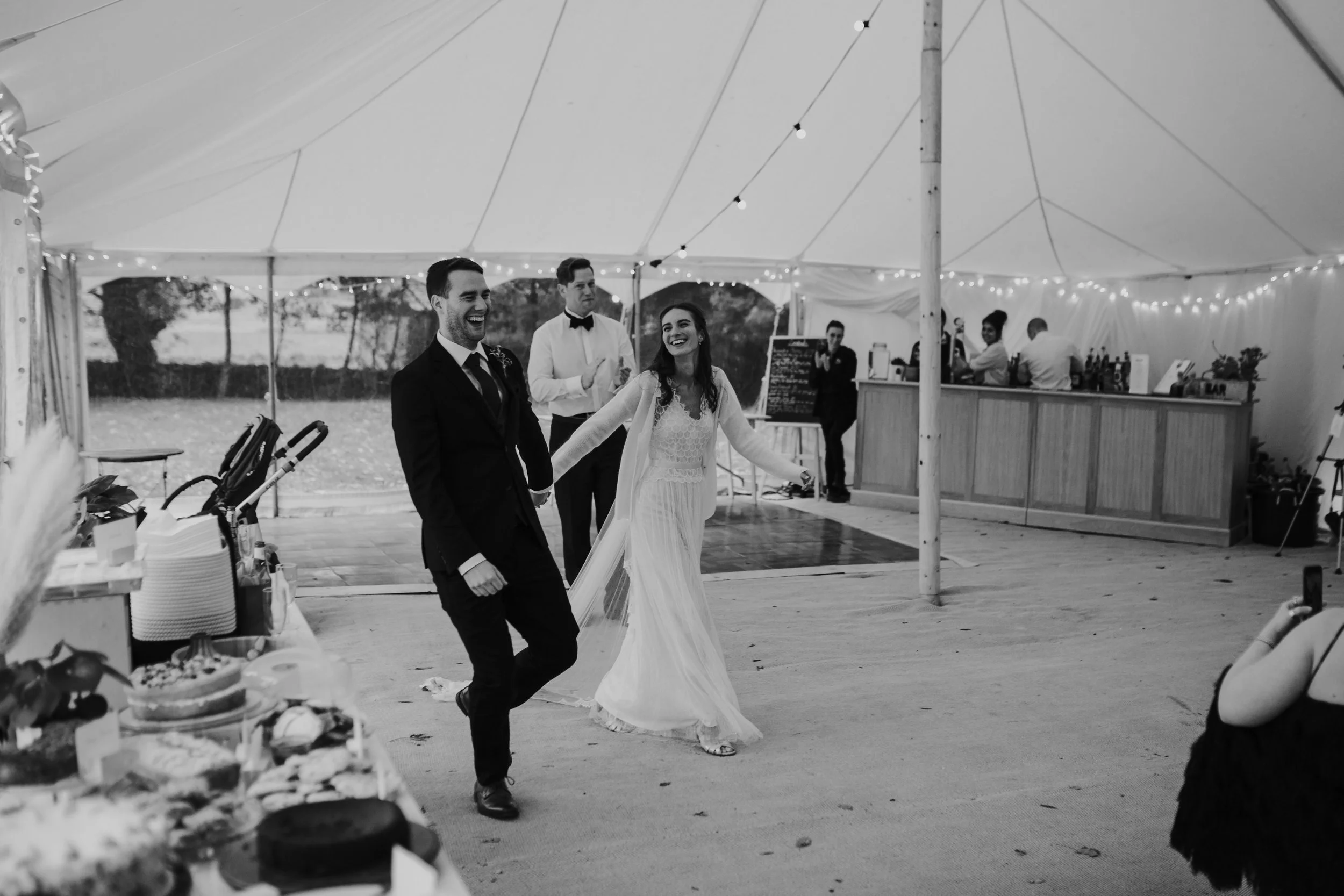
Classic layout
Straight dining rows or round tables
Defined bar position
Standard dancefloor at one end
Clear service corridor for catering
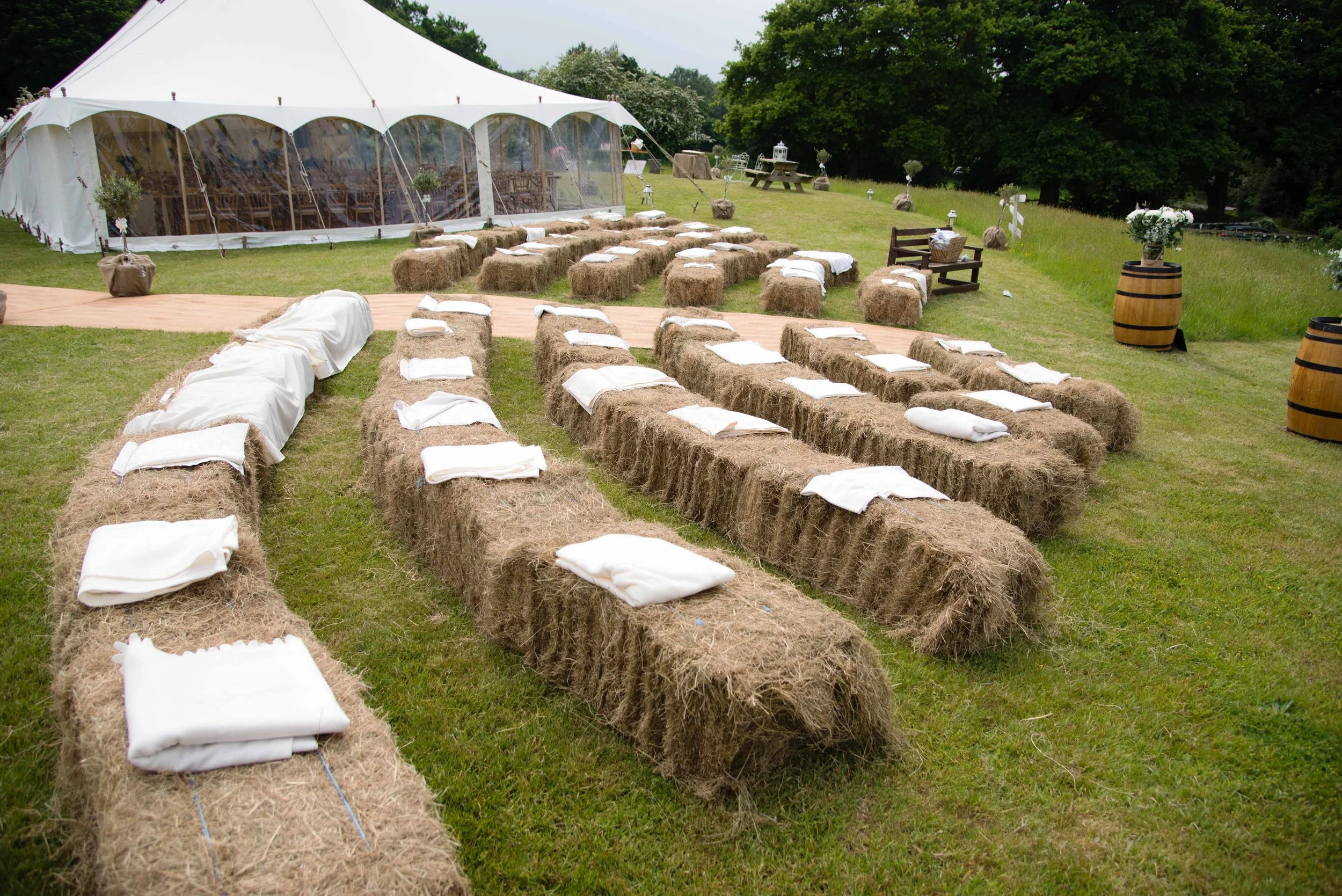
Country garden wedding
More open canvas feel
Drinks reception spill-out area (separate canopy or linked structure)
Practical consideration: garden access for vehicles and ground protection
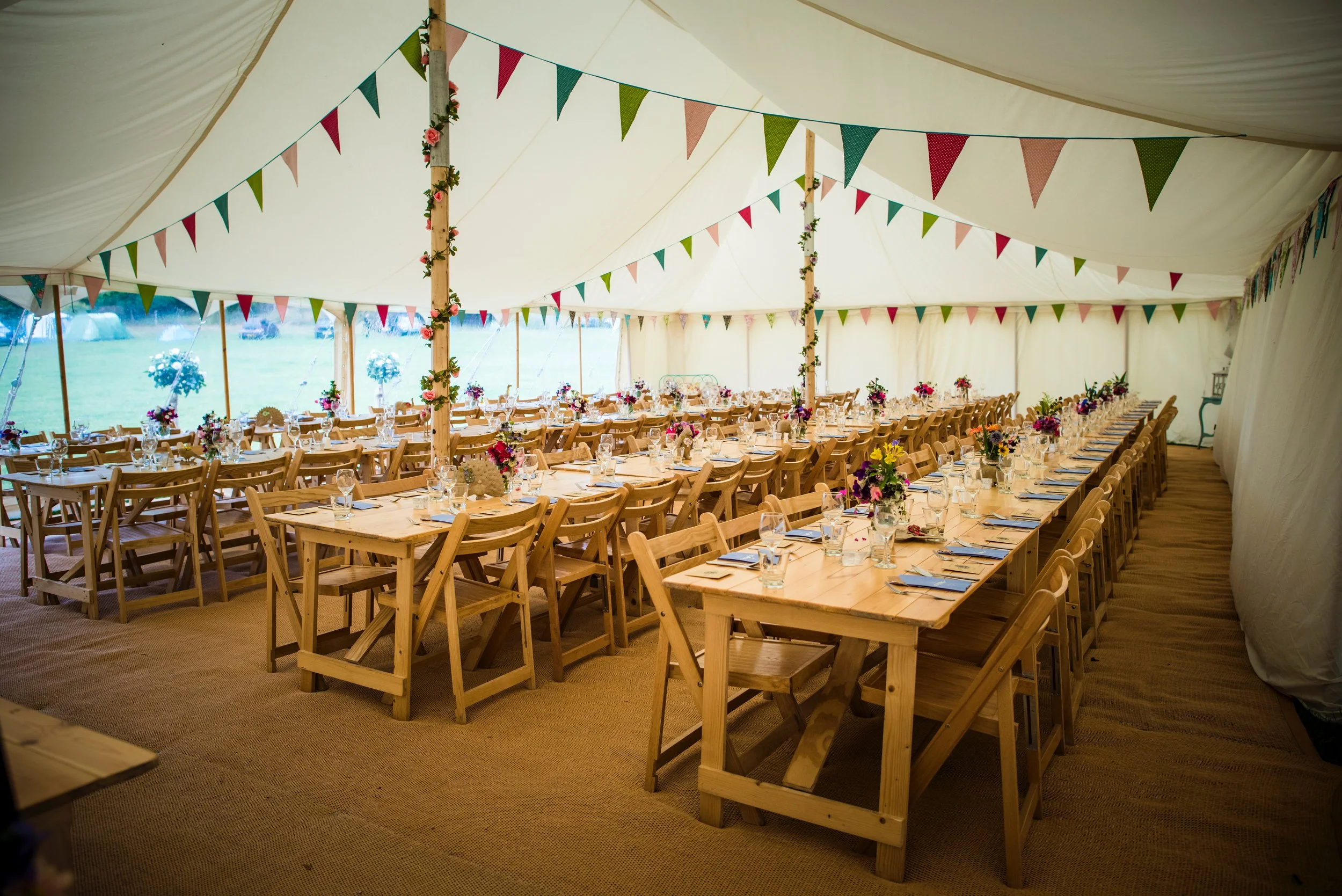
Formal dining focus
More space per guest (wider aisles, larger top table, service access)
Strong lighting plan for speeches and dining (then adjust for dancing)
When to choose a traditional marquee
A traditional petal pole marquee is often the right choice if:
You have space for guy ropes and want a structure that reads “marquee” immediately
Your venue is outdoors-first (garden, estate grounds, field setting)
Your priority is the traditional canopy shape rather than a clear internal span
Linings, flooring, and lighting
These topics can be deep, so here’s the planning-level summary:
Linings affect acoustics, appearance of the ceiling, and how lighting reads.
Flooring affects comfort, accessibility, and the level of finish.
Lighting has two jobs: functional (dining, service, safety) and atmosphere.
Clearspan Marquees
A clearspan marquee is a framed structure designed so the interior has no centre poles. That changes how you plan the whole space: tables, dancefloor, bars and stages can sit wherever they work best.
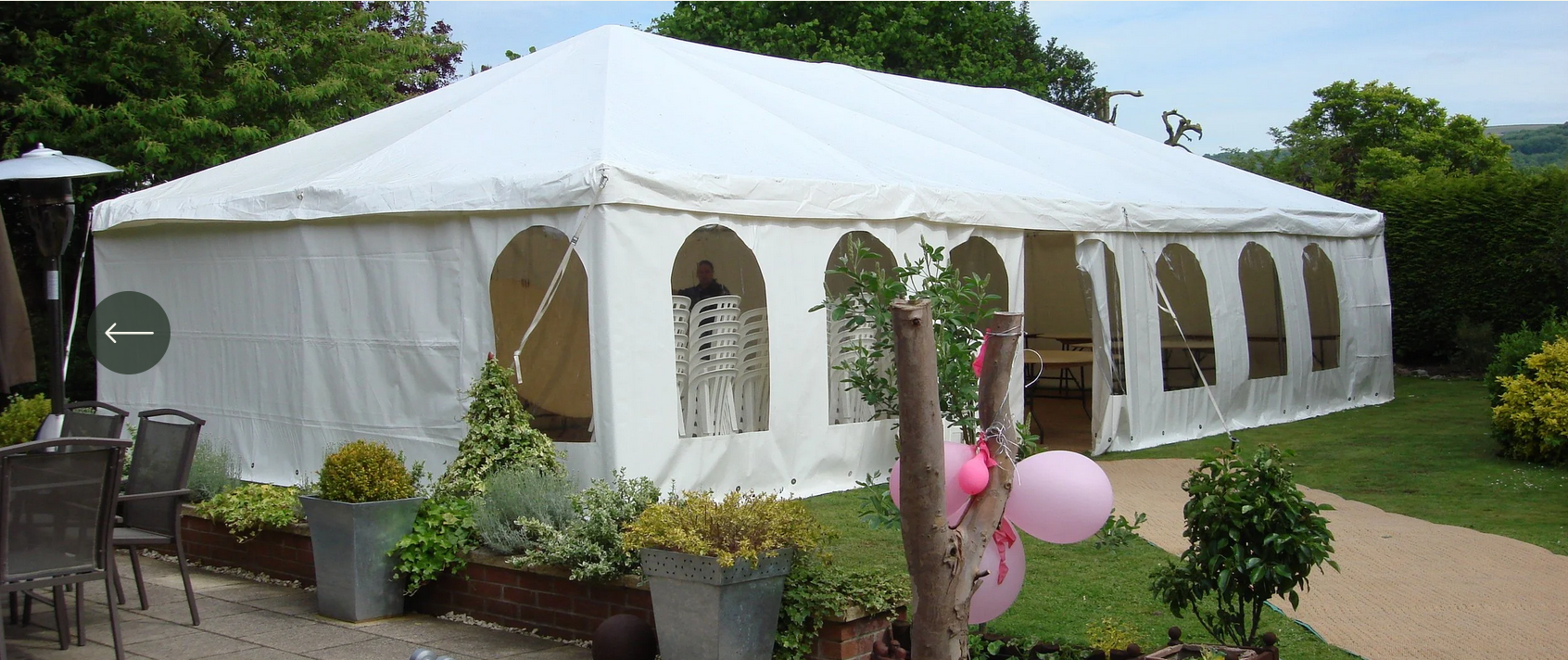
Pros and cons (from a couple’s perspective)
Pros
Open plan: no internal poles affecting layout
More options on constrained sites: doors, walkways and links to buildings can be planned with fewer structural compromises
Scales well: useful for large guest lists or complex zones (lounge + dining + dance + bar)
Season-friendly: works well when you need robust weather planning (see below)
Cons
You’ll rely on fit-out choices (flooring, linings/draping, lighting) to define the “feel”
Budget control matters because open-plan space can encourage “scope creep” in styling and furniture
Best use cases
Couples searching clearspan marquee wedding often have one of these situations:
1) Venues with tighter footprints
Limited space for guy ropes
Requirements around keeping access routes clear
Needing to align doors precisely with pathways/buildings
2) Larger weddings
A larger dining area plus lounge/bar plus dancing
Easier to keep sightlines and circulation clear without centre poles
3) Complex layouts
Band staging, production, or partitioned zones
Multiple catering stations or a larger back-of-house area
4) Winter or shoulder-season weddings
Better control over enclosure, heat retention and layout
More planning required for heating, flooring, entrance drafts, and condensation management
Stretch tents, tipis/kata, sailcloth, and frame marquees
Couples often compare these while researching. Here’s what to know without going deep.
Stretch tents
Stretch tents use tensioned fabric and multiple anchor points to create sculpted shapes.
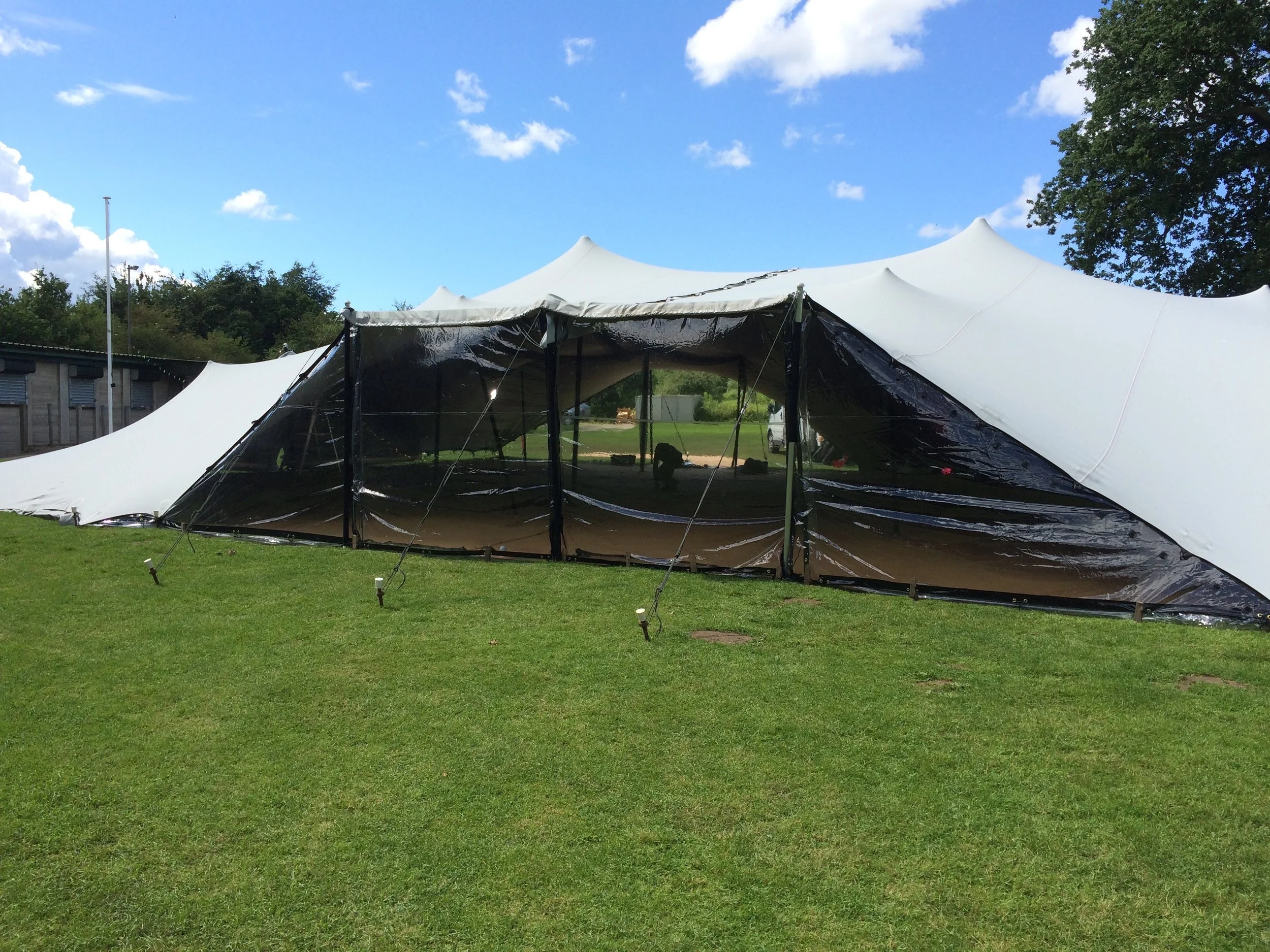
They’re commonly used for:
Drinks receptions
Covered outdoor lounge areas
Mixed indoor/outdoor flow
They can work as a main wedding structure, but couples should check:
How sides are enclosed in poor weather
Flooring options on grass
Heating approach if used late season
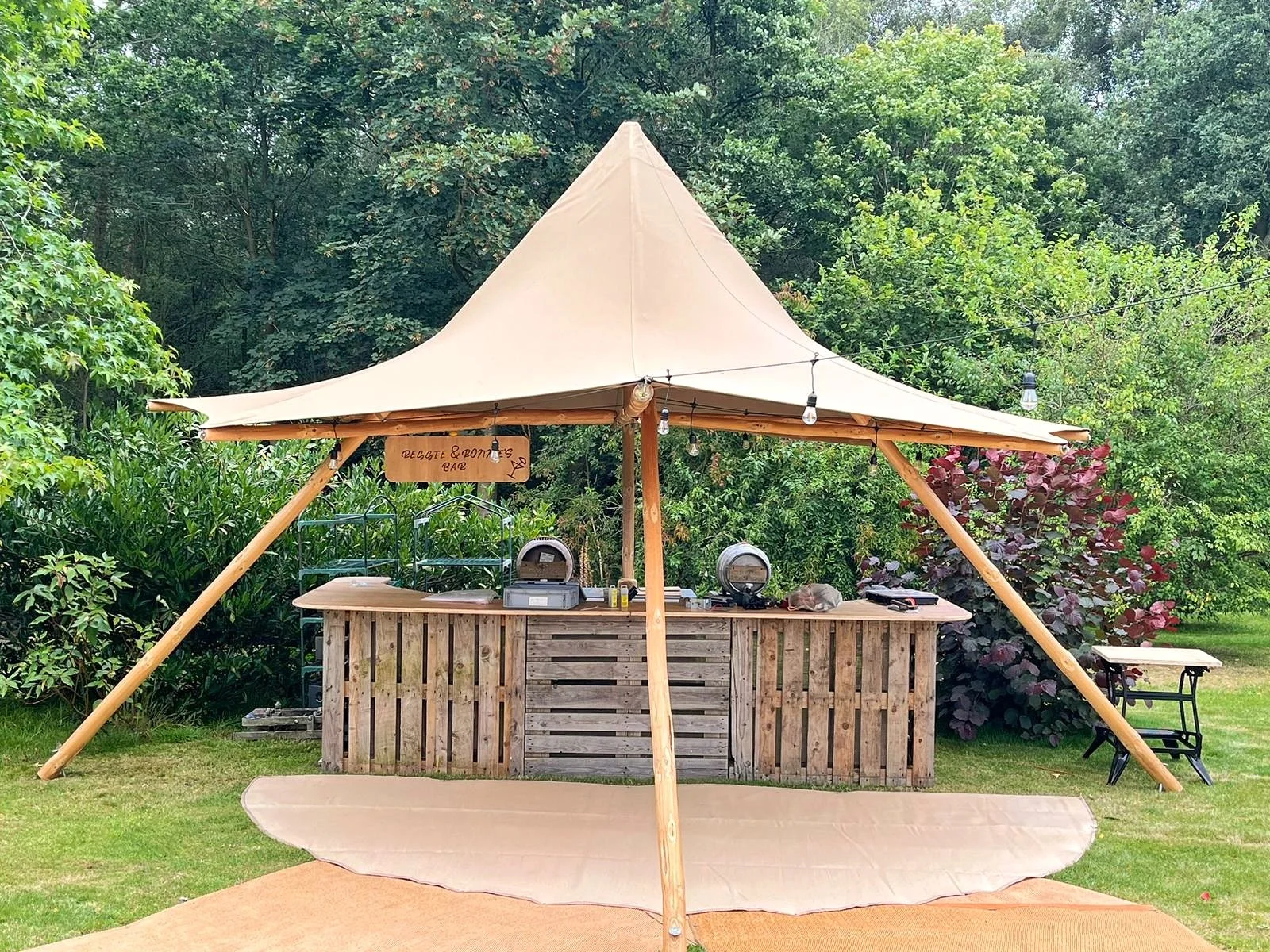
Tipi / kata marquees
Tipis/katas have tall conical shapes and central poles, which creates a distinctive look. They can suit:
Informal seating plans
Festival-style layouts
Capacity planning can be less straightforward because internal poles and curved walls change usable floor area.
Lining vs Sailcloth
This is a common confusion point, because “sailcloth” is sometimes used to describe a look, not a lining system.
What marquee linings are
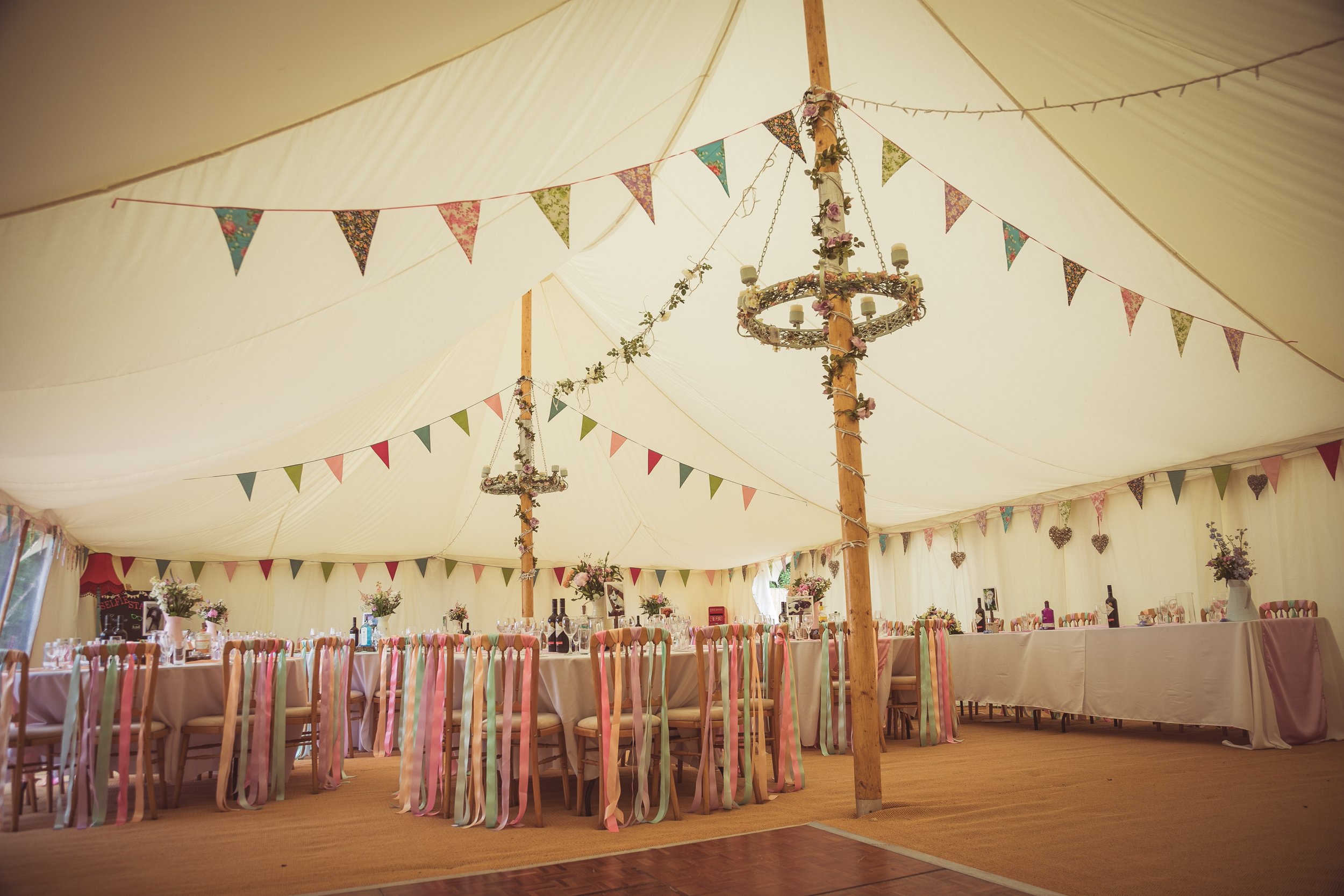
Linings are interior fabric panels fitted within a structure. Couples choose linings to:
Cover structural elements
Manage the interior appearance
Provide a consistent ceiling and wall finish for lighting and photos
What sailcloth-style ceilings are
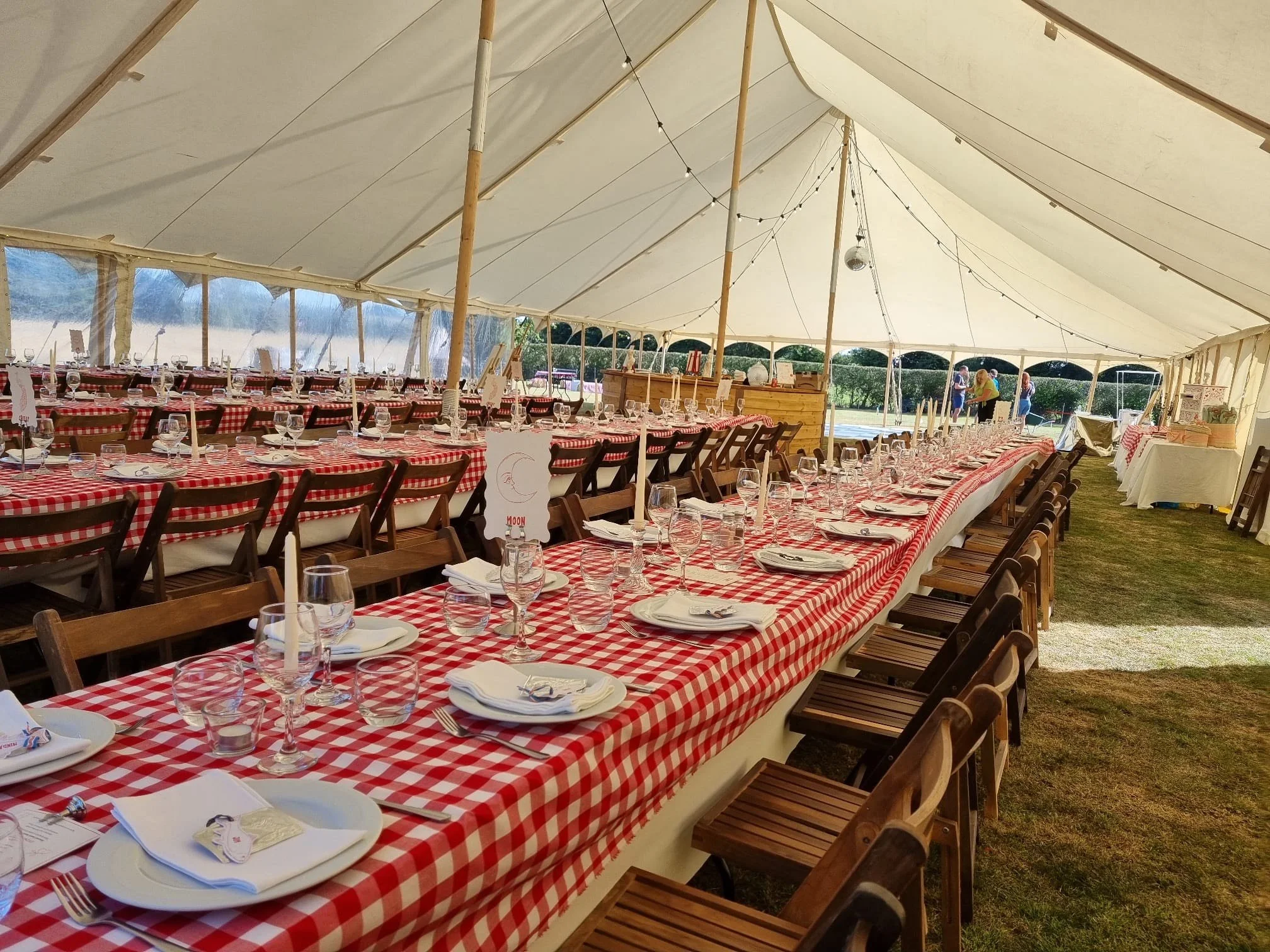
Sailcloth-style fabric is typically translucent and changes the way daylight comes through the roof. It tends to:
Increase daytime brightness
Create a different ceiling texture in photos
Clearspan vs Traditional Marquee
Differences that affect planning
Structure & footprint
Traditional marquees usually require a clear perimeter for guy ropes.
Clearspan marquees can be better on tighter footprints because support comes from the frame, not external ropes.
Layout flexibility
Clearspan: easier to place dancefloors, bars and staging anywhere.
Traditional: centre poles and lines can influence table plans and sightlines.
Interior feel
Traditional: canvas shape is a defining feature.
Clearspan: interior feel is more dependent on lining, draping, lighting and furniture.
Choosing the Right Marquee for Your Wedding
1) Guest numbers (and how space is actually used)
Rather than focusing only on a headline capacity, couples should plan around:
Dining layout (round tables vs long tables)
Dancefloor size and band/DJ footprint
Bar queue space
Circulation routes to toilets and exits
Space for gifts, cloakroom, prams, wheelchair access if needed
Industry guidance for temporary structures includes considerations such as occupancy and exit planning, which are part of responsible event design.
2) Venue constraints (the issues that affect marquee choice)
Key questions to answer early:
Is there space for guy ropes (if considering traditional)?
What’s the ground like: lawn, hardstanding, sloped areas?
Are there underground services (drainage, irrigation, cables)?
What access is available for delivery vehicles and installation teams?
Where will toilets, catering, and waste collection sit?
3) Season and weather planning
For a UK wedding marquee, weather planning usually covers:
Rain management (flooring, entrances, walkways)
Wind exposure (site position, anchoring approach)
Temperature (heating approach, ventilation, drafts at doors)
4) Power, lighting, and heating
Most couples don’t need technical detail upfront, but you do want a supplier who will plan:
Total electrical load (catering often drives this)
Safe routing of cables and trip prevention
Lighting zones (dining vs dancing vs service)
Heating placement and ventilation
5) Safety, fire precautions and compliance
It’s reasonable to ask your supplier about:
Competent installation and relevant safety documentation
Fire safety approach: exits, signage, and clear routes
Fabric fire performance standards used for marquees and linings (for example, UK guidance commonly references BS 7837 for marquee fabrics and BS 5867 for certain linings/drapes).
Any venue or local authority requirements (some sites ask for specific documents)
Fire services and event safety guidance stress good management and planning for temporary structures, including safe evacuation routes and access.
6) Planning permission and site permissions
Rules vary by location and circumstance. For some sites, temporary structures may be covered by permitted development rights or may still require consent depending on duration, land use, and local conditions (heritage sites can have additional sensitivity).
Conclusion & Next Steps
The fastest way to narrow your shortlist is:
Confirm site constraints (space, access, ground)
Decide whether your priority is traditional structure feel (petal pole) or open-plan flexibility (clearspan)
Build a simple layout plan (dining, dance, bar, toilets, catering)
Discuss season, power and heating early so quotes are comparable
From there, you’ll get more value from supplier conversations and you’ll avoid common late-stage changes that impact cost and timings.